Tuesday, 12 June 2012

Nights at the Circus by Angela Carter

Angela Carter is one of those writers who have been on the periphery of my personal reading radar for a while. Feminist friends revere her work. She's one of the big literary names who deal in fairy tales. And she's been massively influential.

Nights at the Circus is a novel about Fevvers - a cockney pronunciation of Feathers. She's a miraculous woman who has wings and can fly, and she's found a career as an acrobat. The book is divided into three parts. In part one, she tells her story to an American journalist, backstage in a London theatre, over the course of a night. The journalist wants nothing more than to prove her fake and burst the bubble of her fame. In part two, she starts on a world tour with a circus, and the journalist, seduced by the mystical attraction of circus life, follows along, signing up as clown and living incognito in the circus. Part three, ... well, I'm not going to spoil the story.

The novel is written in quite dense prose. It is not a quick read, and requires some concentration. The story moves in unexpected ways, and every aspect of the novel becomes more and more surreal and dream-like as it progresses. Starting with a relatively straightforward biographical narrative, the growing sense of unease is infused into the story gently: something odd is happening with the passage of time. There are unspoken things, sudden changes in the flow of conversation, meaningful glances get exchanged.

In part two, the surreal / fantastical elements become more prevalent. Animals are different. Clowns have their own mythos. Some magic appears to occur (beyond a winged, flying woman). And part three - well, all bets are off in part three, and we're deep into surreal, dream like, trance like crazy. Narrative voices change from first person to third person from one paragraph to the next (up to this point, all was in third person), among other twisted writing methods. Part three feels like a bit of an acid trip in the 1960s, in some ways. But the story still gets (largely) rounded off.

Underlying the novel are a rather large number of ideas, half-thoughts and notions about gender, women, men and feminism. Sometimes they are voiced by the author, in a carefully chosen phrase in descriptive text. At other times, characters openly discuss these themes (a particularly memorably dialogue is an argument about relationships where a maternal figure tries to convince Fevvers that falling in love might be more harmful to her self than prostitution would be). Sometimes, there are plot developments that are symbolic or metaphorical. Women, on the whole, fare best when they connect and interact with other women: even a whore house is utopian and idyllic, with no conflict between the whores, just as long as the men are not around. But as soon as men are involved, there is violence. Wife beaters, wife murderers, sinister religious oppressors, rapists... even our male protagonist at some point casually considers raping a vulnerable, almost unconscious woman who finds herself temporarily in his care, although it never goes beyond a hateful throwaway thought. Women without men (or children) flourish in this novel. Men (and children) bring suffering and complete loss of self.

No wonder Angela Carter's novels are dear to the heart of any English students tasked with writing essays about feminist literary theories.

Densely written and surreal, at times experimental - this novel is not my usual fare at all. It has some beautiful passages and chapters and ideas. Fevvers is a memorable character, cheerfully low brow, sweaty, smelly and untidy, described in vivid detail and imprinting herself in my memory.

Yet as a story, the novel is not entirely satisfying. There are long passages where I was bored as a reader. Some plot devices seem too strange to have meaning or reason. Some storylines remain unresolved. In short, by the time I finished reading, I felt only half satisfied with it.

Rating: 3/5

Friday, 8 June 2012

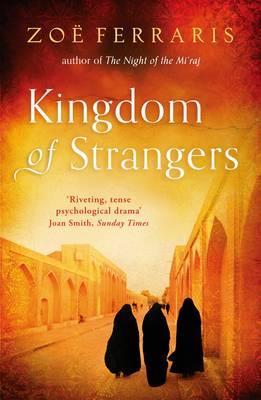
Kingdom of Strangers by Zoë Ferraris

Kingdom of Strangers is the third crime novel in a series set in Jedda, Saudi Arabia. It follows from The Night of the Mi'raj and City of Veils. Some of the characters from the first two novels make appearances, but the novel could probably be read on its own. (That said, the novel is much more enjoyable when you know the history)

By now it is clear who is the undisputed hero of this series: Katia, a female forensic scientist, working for the police, mostly stuck in a lab, but keen to have a more active role in the investigations. (The first novel centred more around Nayir, a Bedouin desert guide who got involved in a murder investigation and met Katia, but by now, Katia is the central pillar of the stories)

Kingdom of Strangers starts with the gruesome discovery of 19 dead bodies in the desert. A serial killer in Saudi Arabia - almost unheard of. And he's been busy, undiscovered, for ten years...

Meanwhile, the newly arrived inspector Ibrahim, tasked with leading the investigation, is having an affair outside marriage - and, when he turns up at his lover's flat, she is missing.

The novel is quick to set up its main plot strands, but chisels away at them at a pace that is steady, confident and not too rushed. It's not the sort of novel where each chapter ends on a cliffhanger, and each cliffhanger is more unbelievable than the last. Instead, the tension is amped up at a steady, confident pace, and the novel is engrossing all the way through. For a few chapters, I thought it might descend into stereotypes (serial killer toying with his pursuers, making it personal, etc.), but thankfully, the story stops feeling as if it were following a template soon enough.

One of the big attractions of this series has always been that it is set in Saudi Arabia - a country most of its readers might never set foot in (I doubt I ever will), and a country with a culture that is about as far away from Western philosophies as it is possible to get. The book treats its characters with a credible level of complexity, and the reader with a degree of respect. As Westerners, the readers would miss a lot of information if it was not spelled out, and so it is, but never in an obtrusive way. Exposition is handled masterfully. We are simply part to characters' thoughts and analyses - and those thoughts are often determined by the expectations of the society around them, and their own internal conflicts whenever they chafe against the limits (or when they transgress). There is an awful lot of chafing in this novel, but it seems quite credible that regular people in Saudi Arabia have to tightrope walk on a very thin line for much of their lives...

The book is not entirely without flaws. Coincidence, that cheat, does affect the plot, and one revelation is preceded by a cloaked premonition in a dream. Both are forgiveable - the novel would have worked just as well without the latter, and the coincidences are small in number, and occur early in the timeline of the novel.

Of the three Jedda murder novels written by Zoe Ferraris, this has become my favourite. I breezed through it in two days (which is fast, for me), and was completely hooked all the way through. Encountering an actual adulterous character - and his unique crises of conscience, challenges, and the threats hanging over his head - was an incredibly effective source of tension. It made the serial killer mystery pale by comparison, and turned this book into a real thriller.

I enjoyed the story so much, I would recommend the entire series to anyone. I would definitely recommend reading the first two books before tackling Kingdom of Strangers, just so this one can be appreciated fully. The preceding novels are both good books in their own right - but this one is absolutely brilliant.

Rating: 5/5

Tuesday, 5 June 2012

HHhH by Laurent Binet

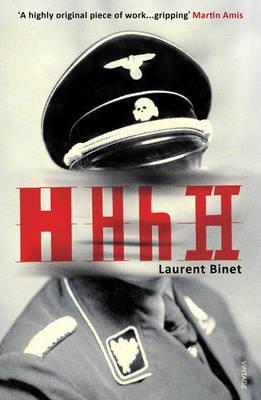
HHhH. At first, I thought I was looking at cyrillic writing, or, perhaps, sanskrit. The same inscription, etched into the pages on the side of the book, adds to the mesmerising effect. A closer look, and I find myself realising that I am seeing Latin script after all - to be more precise, one letter, four times, in four fonts. I am intrigued enough to pick up the book, read the blurbs, read the back, and ultimately, intrigued enough to buy it...

The book, I am told, is a historical novel, about the (attempted) assassination of an important Nazi. It is an almost untold story of derring-do, resistance, and pluck. It is also a novel about the writer, trying to write his historical novel. In short, it is new, fresh, original, different.

Well, I am only partially deceived by this description. It is indeed a (presumably autobiographic) novel about a young Frenchman trying to write a historical novel about an assassination. Except, it is never a novel about the assassination - instead, it is also a novel about Reinhard Heydrich, the Blonde Beast, the Butcher of Prague, competent, cold and ruthless Nazi bureaucrat and leader.

Some assassins do appear - they are mentioned, in passing, in the first few pages, then forgotten until more than a third of the way through, then they disappear again until we are two thirds of the way through, and finally, about three quarters of the way into the novel, they make another appearance.

They are ghosts in this novel, barely there at all.

How come?

Well, this writer is obsessed and serious and wants to use only material that he has historic references for. No invention. No improvised line of dialogue. No description that is not taken from eye witnesses or photos or other historical record. No fiction in his history at all. (But even as principled as he is, he cannot keep this up, so he makes up some details, some conversations, here and there... and then, promptly, points them out in the next scene, points an accusatory finger at his own work and declares: this is where I lied, and thus, exonerates himself in his own eyes)

A lot is on the records about Heydrich. But his (wannabe) assassins - well, the Nazis took great care to eradicate anything and everyone to do with their deeds. Little survived. Barely enough for an interesting anecdote at a dinner party. Barely enough to fill a five thousand word novelette. Not even remotely enough for a novella, or a novel...

So the balance, in the historic bits, swings towards Heydrich. Brutal, calculating, almost idol-like Heydrich. Aside from his "Negroid" lips and his "hooked" nose and his "falsetto" voice, this imposing, tall, blonde, efficient bureaucrat is the ultimate Nazi, and our author cannot resist being ultimately "impressed" with Heydrich. Sure, he berates him physically (see the quotes above), spouts fury about his deeds, but, when all is said and done, we are left with the image of a fascinating, dominant man - perhaps the closest embodiment of the sort of Nazi that Christoph Waltz portrayed in Inglourious Basterds that exists in the historic record. Brutal and cruel, yes. Cold and ruthless, yes. Cultured, too: he plays the violin "better than Sherlock Holmes", we are told. And, in his own twisted way, principled: all the underlings he hires are chosen based genuinely on merit, rather than connections and belief in Nazism.


Perhaps to balance this growing sense of fascination with a dark lord, we are offered the odd vicious adjective or noun ("monster", "beast", "butcher", "perverted") and Heydrich's wife is described rather like a hysterical dominatrix. Other Nazis become animals (Hitler is a hamster, Göhring and Röhm are pigs). And no shortage of venom is poured over pacifists, appeasers and collaborators.

It is hardly intellectually challenging to read. Some sentences are so dripping with the author's judgement, they might just as easily have found themselves in the Daily Mail...

But even Heydrich is not allowed to be the dark (anti)hero of this novel. No, at its heart, this is a novel about writing novels. In a move that Charlie Kaufman might have been impressed by (see Adaptation), it is the author who really takes centre stage - him and his changing girlfriends, who meekly tolerate his historical obsessions and have little other than "passion" and a name each, but no real personalities or influence on his mind.

This author likes to quote other writers - up to seven lines from each, so he does not violate copyright and can claim "fair use" - and (largely) he likes to deride their methods, their clumsy prose, their expositionary dialogue. More rarely, he will offer praise (though usually a backhanded sort of praise). When not comparing his own approach to that of other, more established writers, we sometimes get a fiery rant, about writers or politicians or later, fame seeking murderers. And when not being ranted at, we get scenes bemoaning his challenge, and the importance of getting this right, to pay homage to those nearly forgotten heroes...

This writer is in love with himself and his own voice. But he does not have a high opinion of anyone else.

The book is fast, each chapter / scene merely a snippet, some no longer than three sentences. It is a book of polaroids - no, a book of tumblr entries, just a bit longer than Twictions, but not long enough to lose the reader's attention. Some scenes are entirely in one place and one time, others, barely half a page long, are transitions from present time to history or back again. This is not a novel in any traditional sense, after all. It is a collection of flash fiction. It just so happens that there is some interconnectivity between the pieces.

I did not dislike this book. I often enjoyed it, and breezed through it. But I did not feel as if I got what I had thought I'd bought. This was not a book about resistance and attempted assassination. It was not a novel. It was not historical fiction. Original, fresh, interesting: yes, but not wholesome - it does not make a whole.

In the end, the writer was too in love with himself, and not enough is known about the assassins and their lives and times to fill a novel without creative licence.

The book was not bad.

But neither was it great.

Rating: 3/5

Sunday, 11 March 2012

This is Life by Dan Rhodes

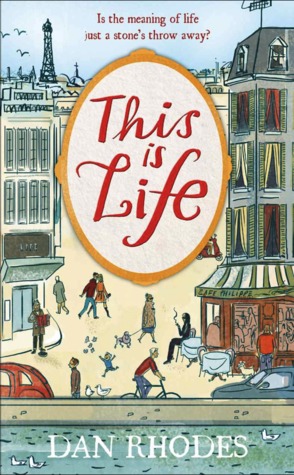
This is Life is a novel set in France. Correction, it is set in Paris. Correction, it is set in the cartoon version of Paris that movies like Hugo,The Extraordinary Adventures of Adele Blanc-Sec and Ratatouille are set in. (I know Amelie is missing on this list, but that's because Amelie has genuine magic, whereas the other movies just have the right sort of colours and tone, without feeling really magically French at heart.)

The book centres around Aurelie and various acquaintances and connections. Aurelie is an arts student, who, for her project, throws a pebble into a crowd find a subject she intends to draw pictures of for a week. The pebble hits a baby. After a brief telling-off, the mother of the baby hands it over and tells her to meet her again, exactly one week later, to return it, while she takes the week off.

Other stories are about an artist who is about to spend three months nude on stage, storing every bodily excretion in visible jars, and the story of Aurelie's friend Lilian who is so amazingly attractive that all men fall in love with her. Lilian breaks their hearts while searching for the one true love.

There is no shred of reality in this book: it's all sugarcoated and coloured with cartoonish glee. Which can work (and did, in Dan Rhodes' Little Hands Clapping), sometimes.

In This is Life, it does not work. There is a constant smirk on the narrative voice's face, a distant and slightly annoying tongue in cheek, lambasting artists, academics, arts students, the French, the French president, the Euro, women, the Japanese, romantically inclined men, ... basically, anyone and everyone in this book. More than once you will find yourself reading characters having conversations or thoughts that are basically an author, making a point / having a rant. The only character who is not annoying or being mocked is Herbert, the baby, and he has immaculate comic timing, blowing raspberries at just the right moment. (A strangely happy baby - he rarely seems to fuss and whinge and cry). In short, we are reading something that is written with a slightly superior tone throughout, and this grates.

It's all perfectly readable and not boring, but it lacks real joy. This is the sort of book that, were it a movie, would feature lots of music to induce the emotions it wants you to have, and a warm and cosy, but rich, colour palette, and somehow, in all the hubbub and cutesiness, some people may be convinced they are having a good time. And maybe, for other readers, it will work. For me, it did not. (Neither, I should say, did Hugo, the film. I get the strong sense that anyone who likes Hugo would also enjoy This is Life).

Rating: 3/5

Monday, 5 March 2012

Konstantin by Tom Bullough

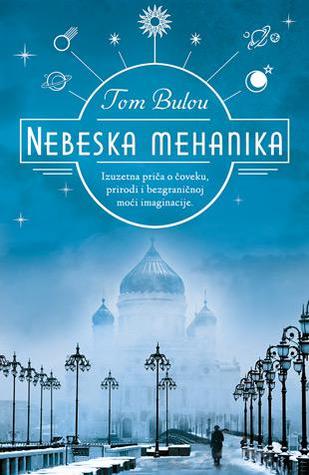
The Serbian cover is so much prettier
than the ones used in Britain...
I'd been keenly awaiting this book thanks to hearing snippets of it at a reading.

Konstantin is a book inspired by a real historical character. It isn't quite a biography, but rather a novel that takes known data, and fleshes it out with plenty of imagination and details and narrative flair.

Now, I am not entirely sure how much to give away of the historical role Konstantin would play. I realised near the end of the novel that I may have known far too much before I started reading it: I knew something about the nature of his work, I had heard a scene from the book (which, in the text, is actually about 80% into the book, i.e. rather close to its end), and I had assumed this would be a traditional biography, with a hefty focus on the man's achievements.

It is not. It is the tale of a boy, growing up in Russia, and becoming an oddball young man. The narrative ends before his main body of work really starts - only a final chapter that is far removed in time from Konstantin tries (ineffectively) to give us a glimpse of the relevance of his work. We get (exciting) hints at embryonic ideas, but we never get the full picture.

So, for the sake of this review, I will try to imagine that I knew nothing of Konstantin at all before reading the book. (Sorry for not using his surname - I really, really struggle with Russian names, and, at any rate, it is different in the book from the historical figure, presumably to indicate narrative freedoms that were taken).

Konstantin is a boy with a huge imagination, and a fascination with technical things. Falling ill, he nearly dies and loses most of his hearing. As a result, he spends the rest of his life a bit removed, a bit of an outcast, a bit different from everybody else - and struggling to find his place.

This is not a misery book - rather the opposite. Konstantin is full of infectious enthusiasm, permanently fascinated, and brave, even foolhardy. He can be headstrong (it is as if everyone else is not entirely sure what to do with him, but he somehow has a sense of his purpose, even if no one else can see it, and even if he cannot really put a name to it himself). He has that peculiar tunnel vision that great minds often have, where his imagination takes him away from the immediate surroundings. He is never boring.

Reading this novel is a joy: the writing is confident and not afraid to draw attention to itself. It allows itself dramatic, poetic, aesthetically stunning sentences (the most fanciful of which is at the end of the very first scene, gloriously announcing: this book is not afraid to dazzle), and almost every scene is like a beautifully crafted little gem of its own. This is not a book where each scene ends on a cliffhanger, or a harbinger of the next scene. Rather, each scene finds a perfectly crafted, beautiful ending for itself, and, if the reader so chose, he/she could read the book one scene at a (bed)time, slowly, and enjoy it immensely, without ever feeling a need to speed-read, to reach desperately for the next scene before turning out the lights...

All that said, there are some areas where this particular reader felt a little let down: I felt a bit let down by the ending, partially because the book does not really show the lasting impact of Konstantin. Here is a man whose thinking was years, even decades ahead of his time, and yet, if all I had to go on was just this novel, I don't think I would have got a sense of the full scope of his genius. But to be fair, the novel consciously chooses to be about a boy growing into a man, rather than about a man growing into a shaper of history.

The other main criticism is that, for me, the descriptions were a bit unbalanced: huge focus on details, but often revealing the bigger picture so slowly (or sparsely) that I felt a bit disoriented. It's as if the book had been written by a photographer with a macro lens, always a few centimetres away from Konstantin's hands, but rarely stepping back for a wide angle view. On the one hand, this may be authentically how human perception, deprived of one sense, works. On the other, it can be a bit confusing.

Despite those minor niggles, I would heartily recommend this novel for its beautiful writing, its infectious energy, its loving portrait of a young person coming of age - it is a joy to read. But I would also recommend checking out Wikipedia after reading it, to find out a bit more about the historical Konstantin.

Rating: 4/5

PS: The working title of the novel was, apparently, 'Celestial Mechanics' - and many of the translations have chosen that title instead of Konstantin. Apparently, the publisher worried it might be mistaken for a textbook, so the title was changed. I must admit, I would have been more intrigued by the title 'Celestial Mechanics'... and much more intrigued by the Serbian cover (included above) than the UK covers.

Friday, 24 February 2012

The Man Who Rained by Ali Shaw

Ali Shaw's first novel, The Girl with Glass Feet, mixed magical, fairy-tale-esque materials with a surreal island and a story about melancholy, obsession, love, emotionally stunted men...

All in all, I enjoyed it, but started noticing that it was a very, very emo read.

The Man Who Rained amps up the emo sensibilities to eleven, squeezes in even more magic, moping, wallowing and melancholy, and, somehow, falls completely flat (for me). In fact, it was so disappointing, I started to wonder whether I might have been completely misguided about liking the Girl with Glass Feet.

The rest of the review covers about a third of the plot, so if that is too much, then consider this a SPOILER WARNING.

The premise: young woman, after the death of her father, dumps her boyfriend, decides to start a new life in Thunderstown (a remote place she has only ever happened to see from a plane, and where all the streets are in a spirally layout making it look like a weather system / vortex from above). Her father was "weather powered" - a man who only ever felt alive when watching weather, and whose time in prison crushed the life force and sanity out of him.

In Thunderstown, there are weird things going on: stray dogs are meek creatures, executed by the culler by means of breaking their necks in a hug. And there are strange charms dangling everywhere. People are a bit sinister, or gentle old souls, but rarely in between. She walks up one of the four mountains around the town, and a young, grey, hairless man strolls into view just as she's hidden away in a ruin, gets naked, and turns into a cloud. She's naturally fascinated by this cold, clammy, grey skinned person. The rest of the story is all about how weather materialises as living things around town, and how townspeople are scared of weather, trying to control it by having it killed...

Far-fetched doesn't come close. But I can live with far-fetched. It's inconsistencies in internal logic that I find difficult (this book has a few), and, ultimately, the fact that hard as it might try, the magic spark just wasn't there. I never felt very involved or engrossed, and all the wallowing and moping ended up being quite annoying. Some of the final plot twists made no sense at all, while other plot developments were so obvious in advance that I wanted to slap the characters for not seeing them coming...

Perhaps one needs to be in a certain mood or mindset to enjoy Ali Shaw novels. Or perhaps the first novel is simply miles better than the second. I don't know.

Rating: 2/5

Wednesday, 11 January 2012

The Cardturner by Louis Sachar

A rich, mysterious, cantankerous uncle. A hint about cards. Was I the only reader who, forgetting the blurb on Amazon, briefly thought I was about to read a book about a magician (stage or otherwise)?

But nope, The Cardturner is a book about the card game Bridge. It also has a story - a very neat and nice story about a teenager and the uncle he is meant to endear himself to for the inheritance. But primarily, this is a book trying to get young people interested in playing Bridge.

Well, I thought a lot of the Bridge stuff went way above my head. It's a bit like the latter chapters of Cory Doctorow's Little Brother in that regard: you sort of feel you've been learning and understanding a lot, some of it quite complicated to envision in your head, and then it just breaks through the threshold of "I can follow this" and into the territory of "I'm a bit lost, but carried along by the story".

There are various questions that formed in my mind (how much dialogue can there really be, in the bidding process - it only goes through two or three iterations in all the examples in this novel, so hardly enough to make meaningful communication possible! And how can it be rewarding to play a turn based strategic battle game that can only last through 13 turns? Etc.) - but there is enough excitement in the story, and a sense of the panache involved in some of the Bridge manoeuvres, that I really enjoyed the novel.

OK, so like Holes (the other Louis Sachar novel I've read), there seems to be a bit too much affection for neatness. Holes had various back stories that all tidy up nicely in a way that makes the novel feel like destiny. The Cardturner allows itself a rather large dollop of creative freedom in its interpretation of schizophrenia / ghosts...

But it's a beautiful novel, nonetheless. It's for young people, but I loved reading it, even if I felt that the story was a little too neat and cute for its own good. (That said, there were some jolts that I felt quite acutely as a reader, moments when the story had big impact in not entirely the expected way).

One flaw were the asides to the reader - each time the author writes something like "if I were a better writer, I'd have..." or otherwise acknowledges the writer / reader interface, I feel a little annoyed.

Still, I'd recommend this book. It's a cracking read.

Rating: 4/5