Sunday, 30 November 2014

Jasmine Nights by S.P. Somtow

Jasmine Nights is a coming-of-age novel set in 1963 Thailand. It’s the (first-person narrated) story of Little Frog / Justin, a 12-year-old boy with a very rich family, living in their own private Eden - a fenced estate in the middle of a city, connected by road and canals.

Justin speaks and thinks English, he has an English breakfast every morning, and even though he now understands Thai, he chooses to keep that to himself. He’s spent the last few years playing by himself in an abandoned house on the estate, perusing the library, reading Greek (and other) classics, developing a very posh and wordy sense of self. One might describe him as precocious, I guess, but he is quite different from other literary precocious-child narrators (T.S. Spivet, Extremely Loud and Incredibly Close): Little Frog is not actually annoying. He feels genuine and authentic: he might have a big vocabulary and an amusingly grown up demeanour, but he's utterly convincing as a child throughout. 

One day, he discovers that he has not been alone - his great grandmother lives in the house he thought abandoned, and has observed him. She encourages him to start playing with other children, to come out of his shell and become socialised with his contemporaries...

The novel starts in a somewhat clunky way, as our narrator recalls events in a series of snapshots, like polaroids. Fortunately, the narrative soon becomes more fluid and engaging. It is a story touching on race and racism, finding out about sex, Thailand and the periphery of the Vietnam War, different social classes, but above all else, it is the story of a somewhat lonely boy becoming slightly less lonely and growing up a bit. Fortunately, it is also a very funny novel, so all the serious issues do not weigh it down into something too worthy and sincere for its own good.

In fact, if I had to think of any other novel matching this one for its mixture of warmth, humour, and issue-tackling, it's To Kill a Mockingbird that springs to mind. Jasmine Nights is that rare thing – a novel on a par with To Kill a Mockingbird, with the added benefit of being set in a place and culture somewhat less familiar to Western readers.

Very enjoyable, very funny, very smart, and with a warmth about it that makes it a joyful read.


Rating: 4/5

Saturday, 22 November 2014

Court by Cat Patrick

"For more than 400 years, a secret monarchy has survived and thrived within the borders of the US, hiding in plain sight as the state known as Wyoming."

My brain must be quite strange. That sentence on the cover of Court hooked me: it set up all kinds of expectations. Together with the antlers on the cover and the old fashioned character names, it made me expect something mysterious. Perhaps faerie, perhaps conspiracy, perhaps both. Is the monarchy running in parallel to the state, or is it there a link into the system, wherein the candidates for senators / governors / representatives are all from a cabal of courtly families, hiding their bloodline legacies and power structures by manipulating / downright cheating state democracy? Or is this 'kingdom' the tale of a people living separately from the regular population, perhaps like a gypsy kingdom, a different world view sitting next to our own? I even felt reminded of Emperor Norton when I read the blurb - and his appearance in the Sandman comics - so I wondered whether this might really be a tale of outcasts living parallel lives.

All that, from a single sentence. I was so, so wrong.

In Court, Wyoming is not a US state, but an absolute monarchy. Its  citizens live in a dictatorship that makes some effort at being benevolent (its healthcare system is better than that of 'the democracy' = the rest of the USA, and education is more or less universal), while also being fascist and oppressive (leaving the state requires expensive exit licences, the population is monitored, the state punishes the relatives of those who break laws, etc.). Everyone in Wyoming knows they live in a different nation. Everyone outside the state has no idea what goes on in Wyoming.

Basically, it's not so much "hiding in plain sight". It's really a "daft premise defying suspension of disbelief".

Why bother with such a convoluted, hard-to-swallow premise? Well, it's a novel aimed at young adults, and its plot is basically "lots of teenagers struggling with their hormones are intensely nosy about and interested in each other, gossiping a lot, and having petty intrigues, all while looking forward to a big social party / prom". If that sounds familiar, then you've probably attended High School or something similar.

Yup, Court is basically a novel about High School, only to make it more compelling and add drama, a kingdom and aristocracy / commoner split are thrown into the mix.

Unfortunately, it's a mix that simply doesn't work. Haakon, the crown prince / future king, is a 17-year old who has become an alcoholic a few years ago and overcome alcoholism. I'm sorry, what? Why am I suddenly imagining Mickey Rourke instead of a 17-year-old? Alexander, his best friend, is struggling with his homosexuality, and assigned the task of being Haakon's bodyguard in the aftermath of the king's assassination, because he's not bad at playing football. Again, I beg your pardon? There's been an assassination and a 17-year-old with no real experience becomes the bodyguard of the future king?

The female characters are a little more down-to-earth: Mary is a commoner who has a horse (Carrot) and who is a bit spunky. Gwendolyn is the princess betrothed to Haakon through family arrangements, and all she wants to do is sneak out, play roller derby with a bunch of girls in the democracy, and flirt with a cute hockey player. Okay, so the arranged-marriage-plot is dramatic, and Mary gets a mysterious-stranger-in-the-woods plot, but generally there's less of a problem with the suspension of disbelief in their stories.

The novel starts with the king's assassination, the rest is just teenagers gossiping, flirting, scheming, sneaking out, manipulating, being manipulated, gossiping some more, and getting ready for prom. The greater politics of the kingdom are laboriously set up, clearly intended to form the backdrop of a lengthy series (possibly inspired by Game of Thrones), but there's minimal use of it all in this book. The machinations for power between the four big families have barely begun by the end of the book, and there's not a whole lot to differentiate between any of the families and their motivations. There's certainly no Llanister-like clan of devious psychos, no Stark-like clan of principled honest noblemen, no Tagaryen-like clan of slightly mad power-hungry outcasts… some of the individual teenagers have different personalities, but there's no real tribal level characterisation going on at all.

It feels a lot like wish-fulfilment-literature: teenagers wishing their high school intrigues had meaning and importance in the real world might appreciate it.

In the end, I was not the target audience for this book. Had the promise of a kingdom within the USA not intrigued me, I would probably never have picked it up.

Rating: 2/5

Sunday, 16 November 2014

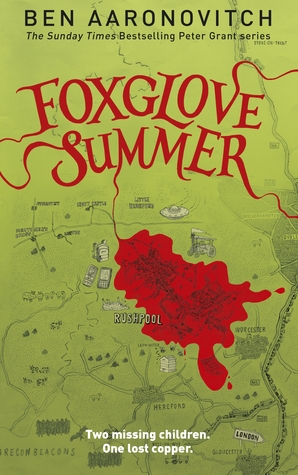
Foxglove Summer by Ben Aaronovitch

Foxglove Summer departs from the other books in the Peter Grant series of London-centred urban fantasies in a number of ways. For one thing, his boss, The Nightingale, is barely in the book at all. The training wheels are well and truly off, and Peter Grant is policing largely on his own. For another, the story takes place in the sleepy rural lands of Herefordshire, stretching the “urban” in “urban fantasy” well beyond its usual meaning. And thirdly, there are a few glimpses of understanding of some of the things that had been hitherto entirely mysterious (Ettersberg, Molly).

Oh, and the Faceless Man plot isn’t really a big thing in this book, either, which is a good thing. The novels which are Faceless-Man-heavy (Moon over Soho, Broken Homes) tend to be a bit confused and unsatisfying, while the ones with their own plots (Rivers of London, Whispers Underground and Foxglove Summer) are much more streamlined and engaging.

If you haven’t read Ben Aaronovitch’s Peter Grant series yet, then I strongly recommend you do. They are great books, thoroughly entertaining, funny, thrilling, and the best urban fantasy novels in the world, full of interesting and likeable characters, and interweaving the fantasy into modern times in a way that actually seems believable and authentic in all the ways that Harry Potter, Harry Dresden, Neverwhere, Kraken, et al do not. Also, they have a rich atmosphere that uniquely realises the full potential of urban fantasy, blending the rich and the mundane with deftness that no other book I've read comes close to.

Foxglove Summer starts with the disappearance of two pre-teen girls near Leominster. Peter Grant is sent out to do a routine check of a nearby hedge wizard, just on the off chance there’s anything supernatural about the case. After deciding that no, this wizard probably had nothing to do with it, Peter decides to stick around anyway and offer his assistance to the local police. Unusually, they welcome him and find him tasks to do, and pretty soon, there are hints that something not quite normal might be going on, after all…

Tackling child disappearances lends this novel a very strong plot, which is consistent, coherent and engaging. The previous novel was a bit more hodge-podge in its central mysteries. Foxglove Summer is almost on a part with London Underground, the strongest novel in this series. There is fortunately plenty of light relief and wit in the dialogue and narration, so even when dealing with missing children cases, Peter Grant does not lose his sense of humour entirely. And, through it all, the aftermath of the big plot twist that ended the previous novel leaves its shadow in Foxglove Summer – managing to be simultaneously heartbreaking and a little too lightweight.

If you’re an existing fan of these novels, Foxglove Summer is a must. If not, go out and become a fan – these books are superbly entertaining.

Rating: 5/5

Bordergame by National Theatre Wales

Review

I’ve heard someone bemoan that National Theatre Wales has sucked all the funding for drama in Wales into itself, leading to the “sad” demise of many a small local theatre. Having attended two NTW productions by now (and wishing I had attended several others), I can’t help disagreeing: NTW does interesting, exciting things, the likes of which I have never before seen in theatres. If the price of that is the demise of all other funded theatre productions in Wales, then it is still a fair price to pay.
NTW’s ethos is that Wales itself is the stage. So if they do Shakespeare’s Coriolanus, the production takes place in an aircraft hangar, and the audience walks around following the actors and battles (and stepping out of the way of cars). Other plays have been staged in a fake German village built for military exercises, in the homes of Cardiff’s Somali community, and in Port Talbot.

Bordergame takes place in Bristol and Newport. It’s presented as an interactive play about immigration, but really, it’s hard to describe it as a play at all. There are two audiences – one, admission-paying, starts in Bristol Temple Meads. These are the wannabe immigrants. The other audience, admission-free, is sitting at home at a www-connected computer. These are the volunteers who help the border agency to watch the migrants and make decisions. If that sounds more like a social experiment than a stage play, then you’re not entirely wrong. The performance certainly takes inspiration from various influential psychology experiments of the past.

I’ve now partaken both ways – first as immigrant, then as border-watching volunteer. Both experiences were interesting, but in very very different ways. As participant trying to make your way from Bristol to Newport, you never really have a full overview. You get two emails before the event (one on the day itself), with instructions for picking up an envelope in a locker at the station. Once you’ve got the envelope, things quickly get quite stressful, as your interactions with the actors may well take you out of your comfort zone. (I suspect it’s a little less scary if you go in a group). The adventure itself is scripted only in part – it’s cheerfully non-linear, and different people get different opportunities and instructions. You literally never find out what everyone else got up to, and it’s all too easy to believe that some people might never have made it even as far as Newport. Those who get there are bound to meet the border agency, which is intimidating in quite different ways.

For the home-audience, the adventure starts with a little quiz, and then, at the appointed time, a chance to watch feeds from cameras watching the migrants. There is a chat room where volunteer border agents can discuss what they see, and there are instructions and a few choices along the way. There’s more of an overview (though not a complete overview: some people fall through the cracks), with a cheerfully governmental feel. It’s not at all stressful.

The tone of the experience is quite satirical, not Monty-Python-satirical but Four-Lions-satirical. For the people at home, it’s all satirical. For the people on the ground, the satire is delivered with a little more steel – but during the train journey, the tension dissipates and everyone’s quite relaxed by the time they get to their destination. This makes the adventure feel quite safe and playful. I can see why the production strikes this particular tone – without it, the paying audience might feel very uncomfortable indeed, especially if the train journey had been omitted – but it robs Bordergame of some of its bite. It ends up being an amusing night out. I am not sure it ends up making anyone think very much about anything.

Of course, it’s unlikely these playful shenanigans would ever appeal to the BNP / Britain First / UKIP / Nazi crowd, so perhaps ‘making people think’ was never really top of the agenda. The audience mostly comprised of students, GROLI types, lefties of various ages and a few theatre aficionados of indeterminate political leaning. In short, it was an evening of entertainment, rather than mind expansion.

If things were just left at that, you could be forgiven for thinking it’s a little bit exploitative (“Hey! Let’s play at immigrants and border guards for a laugh!”). In fact, while taking part I felt reminded of a rumour I heard last summer, that wealthy Mexicans can now have “adventure holiday experiences” where they play at trying to be border-crossing poor people, facing all the sort of obstacles illegal immigrants encounter. Fortunately, things get tied up at the end in a way that punctures any accusation of exploitative entertainment / poor taste. The final phase was, however, quite confusing.

I'd highly recommend taking part, if you can. It might not be seminal, but it is a strong hint at the future direction of theatre - and I certainly hope there will be many more projects like it.

Rating: 3.5/5

Other Reviews:


Experience Report (CONTAINS SPOILERS)

I’ve outlined in broad strokes what this performance is like. Now, SPOILER WARNING, here’s a complete experience report.

After booking the ticket, I received an email from “Miki” (presumably, a sibling) that told me travel had been arranged on my behalf, through an agency called Escape Migration (http://escapemigration.com/), and that $1000 in cash was on its way to me. There was a brief mention that “a bribe is a last resort”. On the website, I had to register and upload a photo for my ID card.


A second email arrived on the day, telling me to approach a woman dressed as a traffic surveyor, near a set of lockers, at Bristol Temple Meads railway station, to get details of my locker number and access code, and to be there for 8pm sharp. 


My train into Bristol was a bit late – if I had been supposed to catch a train at 8pm after picking up things from the locker, I would have missed it. So, naturally, I was a little nervous. (Having read on Twitter that someone had been executed on the Bordergame the night before had not helped my nerves at all!)


The envelope in the locker included a map, $1000 in toy money, and instructions to meet a man wearing a daffodil under a tree by a zebra crossing at a very specific time slot. I had a few minutes, so I hung around. Other people seemed to be hanging around too, but I wasn’t sure whether they were part of the game, or people waiting to be met by friends and acquaintances. At the appointed time, I approached him, using the special phrases (like in a spy movie). He was short, dark-skinned, with a strong accent and a serious, shifty demeanour. He made me wait out of sight, but no one else showed up, so, quizzing me about UK trivia all along the way, he took me to a dark corner to hand over my fake ID. (The ID card is magnificent by the way, I have it still & wonder whether I could get on a domestic flight or buy alcohol with it: it’s a lot more authentic than I thought it’d be! I’m surprised this sort of thing is legal.)


This is where we had a misunderstanding: I’d read the original email to mean that everything had already been paid for and the cash was to start a new life / use as bribe in Cymru, but, re-reading it now, it actually said a deposit had been paid and I’d have to pay the rest in cash. So when he asked for $500, I was taken aback and tried, in my meek way, to argue with him, which I should not have and which annoyed him. Anyway, I failed. He got the full $500 out of me, but I then did not buy the Welsh currency he was offering me at a “good rate” because I had incorrectly concluded that this character was a scam artist. 


Next, I was taken to the back of a van, where I got to sit on a blanket in the dark. Periodically, the door would open and other migrants would be rushed inside. It was a bit scary, as it suddenly seemed possible that we might be smuggled into Wales in the dark back of a van – maybe we had been selected for a different people smuggling operation. Eventually, a very intimidating (white) man turned up, shouted and growled at all of us, and gave us citizenship test books, vaccination documents, daffodil-bearing beanie hats and umbrellas, along with instructions and mobile phones (we had to switch our own off). And he took more of our money. One person protested that he’d already paid, and was left behind, locked up in the van, never to be seen again…


After passing through a very brief ‘customs’ check, where another person was held back, people made their way to the platform. I  noticed that my ID lacked a signature, and my vaccination document had no personal details in it, so I borrowed a pen and filled in the latter. The former was plastic, so the pen could not write on it.


There was a wait for the train – 15-20 minutes or so, and then a 25-minute train journey. This was the bit where the tension eroded. During that time, everyone got lots of text messages meant to trigger actions, amuse, or create tension, but mostly people treated these as diversion while chatting to each other. (It became clear that everyone had been offered different things to trade, but no real trade developed on board the train)


Then, at Severn Tunnel Junction, some of the hat-wearing people got off. I thought they might have made a mistake. Later, I’d realise they (probably) hadn’t: the game is so non-linear that there are, I think, at least three different paths to the end, and people have received different instructions.

In Newport, we were told to head to a specific exit. There, the “border agency” organised us into a queue and divided us into people who were let in, and people who failed and were suspected of being illegal. (Or claiming asylum)

I was among the illegals. I couldn’t sing the Welsh anthem & my passport had been flagged up by Interpol. So I was among those who were bussed to the border agency offices. There, people were again divided – some were interviewed extensively about their attempts to claim asylum. Some (including me) were taken to a sound lab to do a test to see if our accents matched our ID cards. And one was never seen again…


At the end of it all, we were taken away to “our people” and told “Thank you for taking part in Bordergame”. “Our people”, it turned out, were genuine asylum seekers and we met them in a basement somewhere. This is where some of us had no clue what to do, or what was expected of us. People stayed for a few minutes, some had conversations, but despite efforts to make us feel comfortable by serving dhal and squash and so on, the theatre goers weren’t on the whole to keen on hanging around. I did have a conversation with one young man, and sooner than I expected found myself among the last guests left. 


Critique


That is what happened. Here are some thoughts about different aspects of the experience:


The actors were excellent.


The movement and immersiveness was great.


The events in Bristol were great – all the way until we were left to catch our train.


The non-linearity with different paths and outcomes was an interesting choice – but as it seemed to be largely random / predetermined and felt disconnected from our own choices and actions, it felt artificial and unearned and a little frustrating.


The politics was bonkers, and not in a good way. The basic premise is that the UK has split and that Cymru is doing better than the NewK (it was never clear whether this meant England, or England and Scotland). Disease is rife in the NewK. So, Cymru wants to stop illegal immigration. But it was never clear whose shoes the audience was stepping into. I guess the idea was that we were migrants from elsewhere who were already in England, but unhappy there & deciding to upgrade and move to Wales, but this was never explicit. It was certainly odd for all of us (mostly British people) to be pretending we were British in order to get into Cymru,

Unfortunately, there was no internal logic at all. For example, we were continuously quizzed about silly UK trivia from the citizenship tests. However, British people don’t know that sort of stuff. Given that we were all pretending to be British, it was irrelevant: no one does a pop quiz of Brit-Trivia at the border: that sort of stuff is something you experience if you want to naturalise and become British, not as a test of your authenticity at a border. As for the Republic of Cymru / NewK split: it was shoddy. If British IDs were still valid until 2017 and English people can enter Cymru, then why were any of us going to people traffickers? Worst of all, there was not a huge deal of clarity about what exactly was supposed to have happened / be the reality on the ground, so I kept feeling like I did not understand who I was meant to be.


Here’s what should have been different:


We should have had a little more background & intro to the scenario.


Our choices should have had a direct impact on our paths through the narrative. Perhaps the coyote should have hustled for extra bribes, offering a different route at the end. Perhaps the trading should have been organised by actors on board the train – offering different items, and each of us choosing what, if anything, to buy to make our entry into Cymru easier. It should have been possible to run out of money entirely – and there should have been a consequence to that (e.g. an entry visa administration fee).

I think the experience might have been improved if there had been (more) scripted events, within sight / hearing of the audience, but without interaction, to build up a sense of threat and urgency. You know, like the things you encounter when playing PC games like Half Life - things that enhance the plot, but you can't affect. The migrants in the border agency detention facility could have been led past locked rooms with people demanding to be let out on the other side. Someone could have been arrested and dragged off in handcuffs. We could have been given newspapers on the train, with headlines telling us more about the world we were meant to be inhabiting & fleeing from, rather than citizenship test revision handbooks. And it would have been really useful to have some kind of a catalyst at the start of the journey - something to make the audience really want and need to get away to Cymru. 


The sorting of legal / illegal people in Newport should have been more systematic and less played for amusement. Yes, the border guards were a little scary, too, but it strikes me that every white actor had a role that was slightly tongue in cheek, while the dark-skinned actors who we met in Bristol had roles that were the most individual, and the most serious of them all. So somehow the dark-skinned actor (even though he was physically shorter) ended up being scarier than all the white skinned ones – simply because the tense interactions with him were individual, serious, and not made safe by tongue in cheek satire. I know the organisers of Bordergame would not have wanted it to have any racist undertones, but I think that, unintentionally, it did. 


The politics should have made sense. Here’s what it should have been: UK has had an EU referendum and independence referendums at the same time. Cymru has become independent and stayed in the EU. England has left the EU. The EU has punished England by not letting it in the EEA and imposing customs duties etc. English businesses have moved to Wales and Scotland to make use of the single market, leading to crisis in England. Banks have collapsed, the state has gone bankrupt, and healthcare is only available for those who can afford it. England First have started burning down mosques, synagogues, Quaker houses of worship and gay bars. 


In that scenario, to get into Cymru, the audience has to pretend they are European. They are issued with documents listing various different countries, and they have to pass muster as coming from Austria, Slovenia, Portugal, Poland, Croatia, Czech Republic etc. – by knowing a few very basic facts about whichever country their document says they are from, and perhaps having a suitable accent. Not all Brits know the birthday of the Queen, or how many people are in prisons in England and Wales (two things we were constantly quizzed about). But anyone should be expected to know the capital city, president, and political party in government of their home country. And those of the people seeking asylum could do so because they are Quakers, Muslims or queer. All of a sudden, there is some internal logic (when I was asked to sing the Welsh national anthem, I should really have said “of course I can’t, I’m English!”). All of a sudden, there is no special reward for speaking Welsh (one of the theatre goers was particularly attention-seeking and started interjecting comments, and later, conversing with the guards in Welsh to be able to get into Cymru: to my mind, that’s cheating)


Finally, our encounter with the genuine asylum seekers should have been a bit more structured. Left to our own devices, people just didn’t really know what to do, how much to interact, when to leave. I wasn't sure whether I was in a set or someone's home. I've seen another review claim it was a real safehouse, but I don't know whether that's true. There should have been someone to explain where we were, what was going on, and then yes, some chance to talk to people. But there really should have been some framework to understand why we were there and whether we were still role playing or not.


As for the interactive / home volunteer audience, there were some technical issues (feeds kept hanging), but the really important one is that the choices and instructions should have been sent to actors, rather than certain members of the migrant audience. The actors would then presumably have actually acted on them, and done so convincingly and professionally. And there should have been a bit more to guide our choice on who to suspect of terrorism than photos, names and ages. (This is where giving choices consequences could have come in – by giving the monitoring audience access to specific moments and choices the migrant audience members make, and perhaps some more data)


Basically, Bordergame should have been a bit braver, a lot more logical, a bit more realistic, and a bit more intelligent / less shallow. I still think it was a great idea and well-executed project – but with some tweaks, it could have been spectacular.


Friday, 7 November 2014

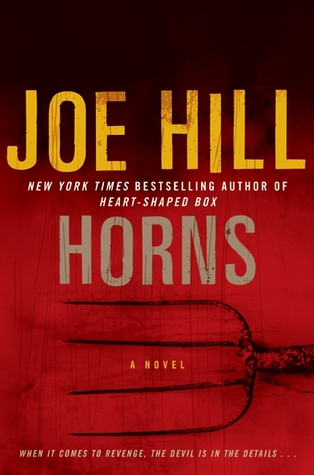
Horns by Joe Hill

I’ve been noticing movie posters for Horns recently. Daniel Radcliffe with Horns, in posters that look more or less like Twilight-clones. But then the tweets and Facebook posts of publishers and scifi fans & writers seemed to suggest that a) the movie is quite good and b) the book, somewhat different from the movie, might be worth reading.

So I bought it, read it, and… found myself wondering what all the fuss is about.

Horns starts with Ig, the protagonist, waking up after a night of drunkenness. There are horns on his head. Pretty quickly, he learns that other people enter a sort of hypnotic state when they see the horns, and start revealing their guiltiest thoughts to him – which, quite often, are hateful thoughts. Ig, after all, is the only suspect the police ever linked to the rape and murder of his girlfriend, one year ago. There are some other magical powers, too: when Ig touches anyone, he suddenly knows all the darkness within them. Oh, and snakes are rather fond of him now...

I read Horns wondering what contemporary horror novels are like. The answer, apparently, is not particularly scary. The premise is executed well enough, but it reads like a thriller with a strong fantastical element and religious themes. There is a good dose of hatefulness and unpleasantness, but the horns are really just a tool to unravel a murder mystery – and to arm their bearer in the conflict this causes. There is some sense of humour, too, as it's hard to take things entirely seriously once Ig starts carrying around a pitchfork...

It’s not a boring novel. The pace is good in the present but not so much in the lengthy flashbacks: the oh-so-perfect coming-of-age-with-romance Americanah back story is hardly groundbreaking, and the turning-into-a-psycho flashback has little new to offer, either. There is at least one scene along the way that very effectively pulls at reader heart-strings, so the novel packs some emotional punch, too. But it never terrifies or scares the reader - I can honestly say that the end of the first quarter of An Instance of the Fingerpost left me much more horrified and traumatised than anything Horns had to offer. And the latter is a historical novel, rather than horror...

A half-decent read, but I had hoped for something more unsettling.

Rating: 3.5/5

Friday, 31 October 2014

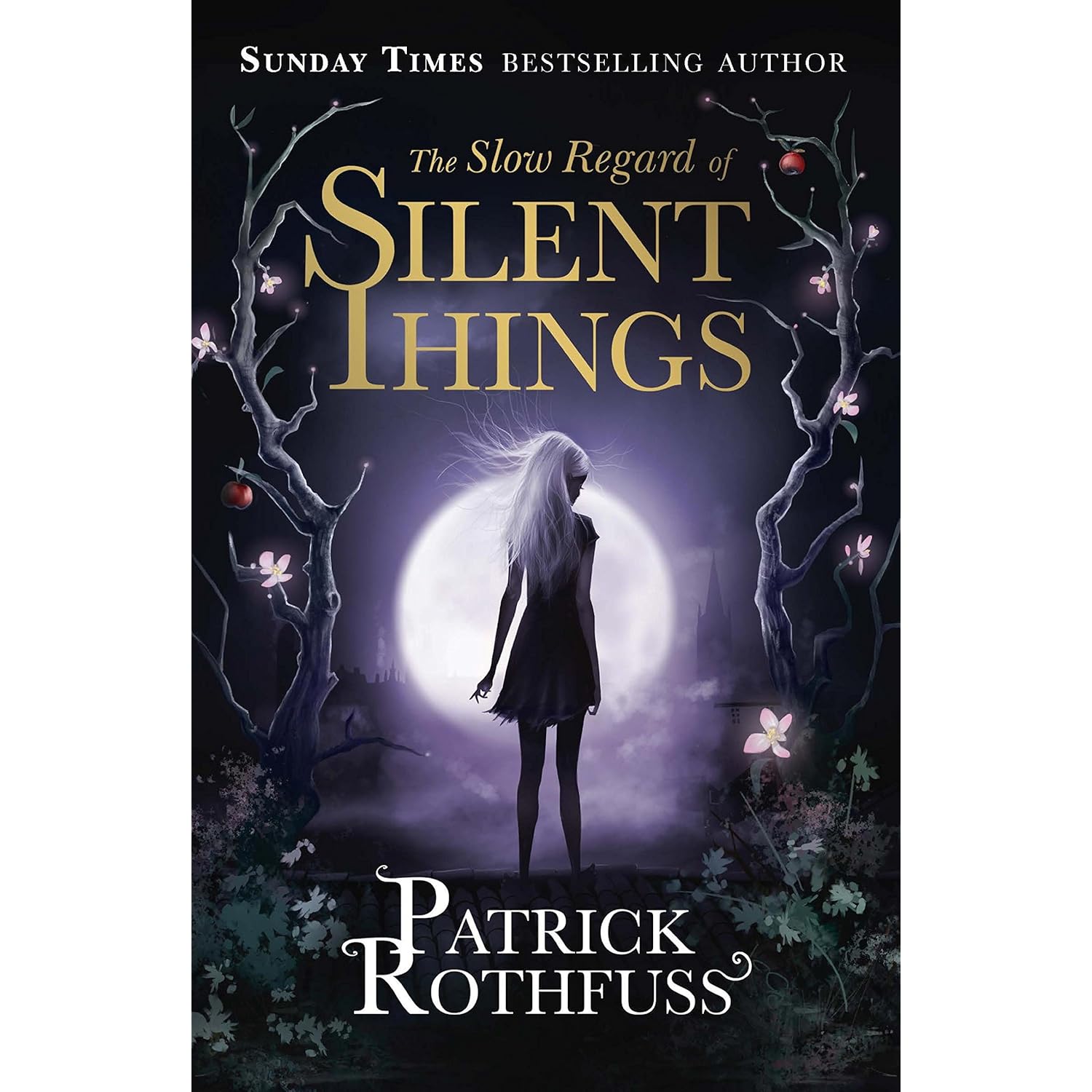
The Slow Regard of Silent Things by Patrick Rothfuss

Update: I've posted a somewhat more coherent review on Amazon. The review below gets a bit ranty and spoilery in the second half.

I thought I’d love The Slow Regard of Silent Things. Unfortunately - and to my own surprise - I didn’t. I feel kinda guilty about that. Not least because I dismissed Pat’s warning that “you might not want to buy this book”.

So, before I start reviewing, a strong word of advice: if you are not an existing fan of the Kingkiller Chronicles, don’t buy this. At least, not yet. Go out and buy The Name of the Wind. Right now. It is amazing. Then, read The Wise Man’s Fear, which is pretty good, too. And after that, if you’re addicted to Pat’s amazing way with words, maybe you’ll be the sort of fan to also enjoy The Slow Regard of Silent Things. I was not that fan.

So, Auri. One of the most bewitching and adorable characters of the Kingkiller Chronicles - and perhaps the second craziest (after Master Elodin), this is a girl who lives in the tunnels, crypts and sewers beneath the magical university, an area which she calls The Underthing. She flits in and out of Kvothe’s story with great charisma and greater endearingness. An entire novella about her sounds like it should be AMAZING.

What is clear from Slow Regard of Silent Things is that Pat, like his readers, is in love with Auri. Who wouldn’t be? She’s the ultimate Manic Pixie Dream Girl, only more manic, a huge dollop more pixie, and plenty dreamy, too. It’s also clear that Pat hasn’t lost his knack for beautiful, playful, musical prose-wizardry. Seriously, the man can write and enchant like no other. But, as Pat himself points out in the afterword (full of anxiety and worries), he has not written a story. He has written a 30,000 word vignette. And that takes some adjusting to.

If you think you’d enjoy a 30,000 word vignette with minimal plot about Auri, then you know what? Give it a try. You might (other reviews suggest that most fans of Pat’s work do) love this book. If you can buy it in a way that benefits Pat’s fantastic Worldbuilders efforts, you should.

Now, if, after you have read it, you find yourself wondering why anyone would not like this book, then read on. But be warned. This is the point where the review is going to go off all spoilery and grumpy. And if you happen to be Pat, or a friend of Pat’s, stop reading now: I would never be as unkind in real life as I’m going to get once I start ranting on teh interwebs. And I would never wish you to suffer the unkindness of having your feelings hurt.

Plus, I’m about to get all scatological! Beware!

SPOILERY Grumpy Bits:

I didn’t enjoy it, because rather than enhancing Auri, this book somewhat eroded her, for me. There were a number of things which I had mixed feelings about. Top of the list is that it turns out Auri’s manic-pixie-dream-girliness is better deployed as a character cameoing in the Kingkiller Chronicles, and less well served by a full length book. When she appears in Kvothe’s story, you get a strong sense that this is a person, with her own life, and yes, some dose of endearing crazy, but ultimately an independent being. She might be enchanting, but she flits in and out of the books like a hummingbird, shining and magnificent and magical because we know that she lives in her own world.

When the reader is thrown into that world for a longer run, suddenly her adorability starts grating away at the suspension of disbelief, because she seems to see herself in the same adoring tones that the reader sees her in. For me, that is a no-no. It feels inauthentic. All the manic pixie dream girls I've encountered in real life might see the world through spectacles of cutesy, but they don’t see themselves through the same specs - not permanently. They might be able to switch on that perspective, briefly, but they all have a very different perception of themselves most of the time. Others might adore them, but they do not adore themselves. Others might glory in the light of their magical glow, but inside that glow, they tend to not catch their own shining light in the same way.

I’m not saying Auri loves herself in a smug, proud, egocentric way. No, not at all. But when she prances around nekkid and in her altogether for quite a few pages, when the narrative voice constantly highlights her tiny hands and her tiny feet and the way she washes her face, her hands, her feet… well, that isn't a real person's perspective of herself. That is the author playing with a very cute doll living in a very enigmatic dollhouse.

It makes me think that if Auri caught a cold, she'd be making dainty, tingly little sneezes. There would definitely not be any snot anywhere near her tiny little nose. And on the rare occasions when she has to relieve herself, she'd be making the most endearing little pellets of poo, like a rabbit or a deer… good thing she does not catch a cold or have a poo in this novel. (She does eat, two or three time over the course of a week, so she's probably very constipated and only has to leave Auri-droppings somewhere once a week. And yes, I imagine they are an assortment of little round pellets, odourless and dry. She might dive into the sewers, but Auri would never get the sort of tummy bug that results in diarrhoea, oh no….)


A gorjuss girl. Not Auri
The thing I've been trying to express with my scatological diversion is this: Auri does not feel quite real when she's the only thing in a story. She seems more like a gorjuss cartoon character. An endearingly crazy cartoon character, accessing her subconscious consciously, with some obsessiveness but mostly some sort of supernatural wisdom… but not a real woman, or girl. And that bothered me.

The second thing that bothered me is that, rather than setting Auri up as an independent character with a life and purpose of her own, Slow Regard of Silent Things somehow manages to cement the impression that she exists mainly for Kvothe. The entire novella is a countdown of seven days until He will come to see her. It turns out that Kvothe is the epicentre of Auri’s life. Yes, she has various obsessions, and a peculiar way of relating to the world around her (and a quirky way with words), but throughout the text, it’s the anticipated meeting with Kvothe that bubbles to the forefront of her thoughts, again and again. I think He even gets capitalised, as if he were a God. Somehow, I had hoped there would be more to Auri than cutesiness and awaiting Kvothe. Somehow, I had expected her to have a bit more autonomy in her purpose…

And the third thing bothering me was the allusion to rape (or near-rape). Huge spoiler, I know. But you were warned.

If you’ve read other reviews of mine, you’ll know that rape is not a topic I feel comfortable with as a reader. When it’s handled in a matter-of-fact way, it startles me. When it intrudes on a story I expect to be wholesome and joyful, it repels me.

Until fairly recently, I would always expect any rape to be the character-destroying and character-shaping thing, for the victim. And this turns out to be the case for Auri - there is a strong hint that a rape or near-rape was the thing that shattered Auri’s mind and made her flee her previous life as a student and take up residence in the tunnels - but now this bothers me even more than rape handled as a matter-of-fact, unpleasant but not life-determining event. Why? Because I hate the idea that rape turns sane women into adorable manic pixie dream girls. (If it did, should someone go out and rape all the ladies to make them more adorably quirky? If we like pretty broken things so much, do we really condemn the breaking of pretty things, or do we see it as par for the course?)

Okay, those last few sentences were pretentious and very very unfair. Really, it’s the rape-in-a-story-that-was-supposed-to-be-comforting-and-wholesome thing all over again. Writers: do not put the raping in my light entertainment!

So, three things that bothered me, and a text that feels more like Pat wrote a fanfiction to his own novels rather than a story with its own two legs: you would be forgiven for thinking that I hated this book. I did not. I adored the prose. At times, I delighted in spending time with a delightful character. But in the end, the things that did not work, or that left a wrong aftertaste in my story-eating-mouth, outweighed the joys of the prose. So, if you know me in real life and wonder whether this book is likely to be under the Christmas tree for you, the answer is sadly no.

Saturday, 25 October 2014

Riding the Unicorn by Paul Kearney

Willoby is a middle-aged prison guard, a husband and a father. But at heart, he still pines for his days as a soldier. His job is not his calling, there is distance between him and his wife, and his teenage daughter resents him. When he starts having visions and seizures, his first fear is that losing consciousness would be very dangerous in his job. For the first time ever, he takes time off for sickness. Then, his visions start to affect not just his job, but his family life.

In his visions, he is pulled into another world, first as an observer through the eyes of a prince, but then physical transfers between worlds start to happen. The other world is medieval, filled with a people who have just fled from their former homelands across icy mountains into a new land, keen to start new lives. But intrigue is afoot, and for complex reasons, the bastard prince Tallimon needs an outsider. He needs Willoby.

Riding the Unicorn is not your average fantasy novel, nor even your average person-from-our-world-goes-into-fantasy-world novel. For one thing, our protagonist is a flawed man. He's quite rough. In fact, he is a thug, and not just because his language is tough and he works in a prison.  In fantasy novels, you don't get many working class protagonists who occasionally hit their wives.

The world he enters, meanwhile, may have some fantastical elements - some magic, some monsters - but the magic is understated, the monsters just fauna, really. Today's readers might be tempted to compare this world to Westeros, except this novel was originally published before Game of Thrones, so it definitely isn't derivative.

This is an intelligent, authentic novel. Willoby is not the type to have a mid-life crisis, but his glimpses of that other world trigger one: suddenly, his own life seems pale by comparison. He's afraid that he is losing his mind, but even more worried about the prospects of talk therapy and psychiatrists. His feelings for his family are decidedly mixed - there is fatigue and exhaustion, but also a stubborn determination to make it work. Meanwhile, in the other world, there's intrigue and powerplays and politics, and the sort of scheming we have come to expect from gritty, realist fantasy fiction (all the more impressive for having been written 20 years ago: the book must have been way ahead of its time).

Riding the Unicorn is never boring. It's very readable, consistently entertaining and intelligent. It could just as easily be marketed as "lit-fic" as fantasy - there is enough focus on characters, character development, and thoughtful treatment of all kinds of serious themes in this novel to satisfy even readers who never touch 'escapist' fantasy literature, while there's enough swashbuckling adventure and grit for fantasy fans not to get bored. This book truly has the best of both worlds - but it is a serious novel, steering clear of comedy or light relief.

The title, however, is poorly chosen. No unicorns appear in the book at all. (Apparently, 'Riding the Unicorn' is a colloquialism for 'going mad'). Putting a unicorn in the title of a fantasy novel might set up the wrong expectations in readers: this is not a frivolous novel of sparkly merriment.

Rating: 4.5/5

PS: You can read an excerpt of Riding the Unicorn online.