Wednesday, 29 August 2018

Rezension: Die rätselhaften Vorfahren der Inka


Die rätselhaften Vorfahren der Inka ist ein leicht lesbares Buch über die Geschichte der Völker die in Peru (und im Andenraum generell) lebten, bevor die Inka ihr Reich zusammeneroberten, und natürlich bevor die Conquistadors auftauchten und Südamerikas Zivilisationen zerschlugen.

Es gibt erstaunlich wenige Bücher über lateinamerikanische Vorgeschichte (wobei "Vorgeschichte" eben als "Vorkolonialgeschichte" gelesen werden muss). Der Hauptgrund dafür ist, dass die Völker Lateinamerikas keine Schriftsysteme entwickelt hatten, bevor sie erobert wurden - zumindest keine, die bis heute entschlüsselt sind. (Die Khipus der Andenvölker und der Inka werden heutzutage als Schriftsystem vermutet, aber die Entschlüsselung ist noch nicht erreicht). Insofern ist dieses Buch wichtig: es macht es dem Laien zugänglich, einen Zweig der Menschheitsgeschichte zu betrachten, der nur sehr selten ausserhalb von Fachkreisen dargestellt wird.

Es gibt viel lobenswertes: das Buch zeigt früh eine Serie von Landkarten, die die Völkerkulturphasen und Standorte ubersichtlich darstellt. Dieser Überblick ist Gold wert - anderen Büchern fehlt er. Das Buch ist mit reichlich Bildern illustriert, und die machen es einfacher, dem Text zu folgen. Vor allem aber ist die Geschichtsdarstellung so objektiv wie möglich und auf relativ neuem Stand des Wissens. Hut ab.

Andererseits kann der Stil des Buches manchmal ein wenig nerven. Es ist immer leicht lesbar, neigt aber hin und wieder zum Grandiosen und Dramatischen. Anderenorts klingt der Autor etwas arrogant, als stehe er über der einen oder anderen Meinung, oder gar des einen oder anderen Völkerglaubens. Das funktioniert, sofern man mit dem Autor mitgrinst. Wenn man das nicht tut, oder wenn man etwas mehr wissen will über das was da in einem halben abwertigen Satz belächelt wird, dann steht man allein im Wald. Und der letzte Punkt, der mich ein wenig verstutzte, ist dass der Grossteil der Quellen aus deutschen Archäologen besteht. Zwar stimmt es, das deutsche Archäologen viel in Südamerika geleistet haben, aber ich konnte den Verdacht nicht loswerden, dass das Buch an Informationsreichtum eingebüsst hat, weil es deutsche Archäologen allen anderen als Quelle vorzieht.

Das Buch ist trotzdem sehr empfehlenswert für Laien und Leute die, wie ich, gerne eine Grundlage des Vorhandenen Wissens über Lateinamerikanische Zivilisationen und Protozivilisationen erlernen wollen.

Bewertung: 4/5

Saturday, 25 August 2018

Review: Hannah Green and Her Unfeasibly Mundane Existence by Michael Marshall Smith

Hannah Green and her Unfeasibly Mundane Existence is a novel about a girl whose parents are separating. It's also a novel about the Devil having a problem, and Hannah's mysterious but kooky grandfather, about adventures with demons and angels and about saving the world.

More importantly, it is a novel by Michael Marshall Smith. MMS is a writer whose career has been a bit non-linear. I first encountered his novels at the age of 17 when I went to University, and I immediately became a fan. Back then, in long-ago 1999, MMS was a writer of uber-cool, edgy, cyberpunk-inspired witty science fiction. His novels One Of Us and Spares have stuck with me for a long time. His short stories, collected in What You Make It, had sharp teeth. Then, in a surprise twist, MMS turned to writing serial killer thrillers as Michael Marshall. These, too, had teeth, and a unique sensibility, combining elements of horror (beyond Silence of the Lambs style violence) and creepy conspiracies into a brew that took serial killer thrillers into surreal and chilling arenas that they had not reached before. More recently, he has returned to writing short novels as MMS, some of which were adapted for TV. Now, Hannah Green - a novel that is, to my genuine surprise, sweet. MMS has never done sweet before, as far as I know.

Hannah Green, with its quirky title and its child hero, seems to take aim at the people who buy books like The Selected Works of T.S. Spivet or Extremely Loud and Incredibly Close or, perhaps, The Hundred-Year-Old Man Who Climbed Out Of A Window and Disappeared. I have read two of these, so I guess I'm one of those people. As writer of considerable talent, MMS adjusts his tone to suit this different genre. Our narration is a bit quirky, a bit sweet, gently bumbling and bemused. There is warmth and wit infused in the telling of the tale. Some readers compare the style to Neil Gaiman's (in Stardust or The Graveyard Book), which is a fair comparison. There are times when it gets a little too sweet, in the way that, for example, the TV show Pushing Daisies tends to overshoot the optimal level of sweetness. On the whole, however, the style is mostly just right.

There are moments, quite a few, when the narration ponders some real stuff. The way the story addresses Hannah's parents' separation, and their feelings, is written with deep insight, rich metaphors, and real heartache. There's a sense of dearly-bought wisdom in those sections, and a depth which took me by surprise. (MMS is a whip-smart writer, a virtuoso with words, but I remember the edgy-angry MMS of 1999. This older but wiser, perhaps kinder version was new to me)

However, it's not all sweetness and wisdom. MMS's version of hell is every bit as disturbing and surreal as one might expect. His devil is dangerous, even if Hannah Green is protected from seeing that side of him. There may not be any explicit sex in the text, but there's real threat and a fair amount of violence. It's certainly not a children's book, even if the main character is a child. Neither is it one of those books where the child in question is a "precocious" "prodigy" type character (which usually means a shrunken adult with some child-superpowers and weird naivetee that adults wish children had). Hannah may be described by a narration that is adult, affectionate, and a bit twee, but she's pretty normal for all that. Any sweetness is in the narration, not in her actions.

Hannah Green is an enjoyable novel. It is sweet and wise and kind, but there are teeth in there, too, and they are sharp and pointy... A real gem and a bit of a surprise.

Rating: 4.5/5


Thursday, 23 August 2018

Review: The Bullet-Catcher’s Daughter by Rod Duncan

The Bullet-Catcher's Daughter is a fast-paced adventure novel set in an alternative, steampunky Britain, where the industrial revolution has slowed to a crawl and a civil war has split the country into a puritan Republic in the North and a flamboyant Kingdom in the South.

Elizabeth Barnabus, our heroine, is a refugee from the Kingdom, living in the Republic. She has fled because she was about to be enslaved due to family debts, and being the (sex) slave of an evil old Lord did not appeal to her. In the Republic, she leads a double life, running a detective agency dressed as a man (her supposed brother), while managing the home (a boat) and neighbours as herself. Here, too, she has financial problems, and unless she can earn a huge sum within a few months, she'll lose her home.

Enter a mysterious Lady from across the border, with an assignment that promises to be richly rewarded: find her missing brother (who has left the Kingdom with a circus now touring the Republic), and all Elizabeth's troubles will be solved.

Of course, things never quite go to plan.

There's a lot to like about The Bullet-Catcher's Daughter. The pace is fast. The tropes are fun. (Femme fatale! Circus! Detectives and spies! Mysterious strangers! Women dressing as men to outsmart the Patriarchy!) ... It's never boring and Elizabeth is kept busy chasing her quarry and being chased by nefarious villains.

There's also a lot that could be a bit better. (One of the defining features of Angry Robot books is that they have a portfolio of interesting, promising books, many of which could have used a bit more editorial massaging to polish into shape). For example, the world building is a bit wonky. The history is drip fed into the story, but feels like it only exists in the very broadest strokes. The plot paints a sinisterly powerful Patent Office, but after reading it I still have no idea why the patent office has powers, what its motives are in the present, nor what it was set up to do in the first place. Our hero is supposed to be very good at leading her double life, undiscovered for five years, but in the space of the novel a surprising number of people find out her secret. And ultimately, the resolutions of the plot around the missing brother and the McGuffin felt rushed and a bit... inconsistent. (Pretty much everything about the McGuffin was a bit odd).

So: a pleasant steampunky caper, good fun, but a little rough around the edges.

Rating: 3.5/5

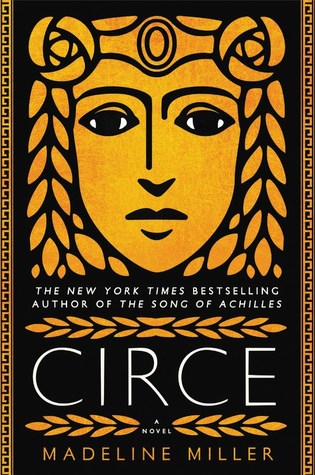
Review: Circe by Madeline Miller


Circe is a witch goddess from Greek mythology. Having read and enjoyed Madeline Miller's Song of Achilles some years ago, I was curious about this new book of hers.

Life is tough for Circe: born a daughter of the titan and sun god Helios, she is not quite as beautiful or striking as many other nymphs. Her ambitious mother is disappointed with her prophesied fate, so immediately starts having more children in the hope of making a "better one". Her siblings are mostly mean to her, and even the one she raises herself turns out to be incapable of love or loyalty. Circe is a bit of an ugly duckling in her family.

It's an encounter with Prometheus that starts her fascination with mortals. She idealises them to begin with, assuming a goodness in humans simply because they are not the selfish and cruel Gods she has grown up amongst. Her naive attempts to help a human don't bear the fruit she had hoped for (love), and her angry attempts at a small revenge turn deadly when she inadvertently creates a monster. Her attempts involve the discovery of witchcraft (magic from a different source than the gods').

Most of the novel takes place on the island Aiaia, where Circe is banished in punishment for her discovery of witchcraft. There, she lives with lions, wolves and wild boars, and, at times, a following of naughty nymphs who have displeased their families and are sent to serve her as punishment for their misdeeds. Sometimes, people and gods visit her...

Circe is a tougher subject matter than heroic Achilles or his lover Patroclus. Her powers and agency are limited: she has witchcraft, but is imprisoned. She is immortal, but female, in a time when women could only really wield power through men. Her role in myths is generally as a side quest, or an obstacle, in some other hero's tale: she is a cameo character. This makes her story more episodic, her relationships with other characters very short-term. She lives on a different timescale from mortals, so all the people she is interested in are mere phases in her life.

The book is faithful to the myths, and that faithfulness limits what it can do to breathe life into Circe's story. Perhaps the most frustrating element is that no gaps are filled in. For example, Circe is disgusted with gods and immortals, including her fellow nymphs. So when she finds her island populated with nymphs who are meant to serve her, she avoids them and isolates herself from them. Yet she is also vaguely protective of "her" nymphs when hostile forces arrive - though she does not seem to know any of them by name or speak with any of them, ever. Her fetish for mortals is understandable, and even her inherent distrust of immortals. A curmudgeonly attitude towards other nymphs who arrive on her island is no big surprise initially, but somehow, it would make a lot more sense for her to develop some kind of relationship with her fellow nymphs. After all, these are the ones who don't fit in, the ones banished for some reason, like herself. There is common ground here, and yet, that common ground is never explored. Circe is filled simultaneously with disdain, disinterest, and protectiveness for them, without ever making a friend or trying to do so.

I did enjoy reading about myths I knew very little about. However, I also found Circe a novel lacking something. It's episodic, but the episodes don't really create a coherent, continuous feeling. Circe's story is serious and a bit joyless. Somehow, a story about the first witch, who lived with and befriended lions and wolves on an island full of naughty nymphs and who turned men who annoyed her into pigs, should have had more of a spark and a twinkle in the eyes.

Rating: 3/5


Wednesday, 1 August 2018

Review: Where the World Ends by Geraldine McCaughrean

Where the World Ends is a novel about a group of youngsters (and a few men) whose working excursion to a stack out in the sea turns into a nightmare when no one comes to collect them after their working time is up. Just a few miles away from their home town, they become marooned on an inhospitable, dangerous, steep rock jutting out from the ocean.

St Kilda was once one of the remotest outposts of British influence in the North Atlantic. A set of islands populated by a few dozen people eking out a harsh living based on sheep farming and foraging (harvesting wild sea birds for food, oil, feathers and fuel). The Warrior Stack, where the story takes place, was a prime location for fowling at the end of the summer, so youngsters were taken there to camp for a fortnight and harvest all the birds they could.

Our protagonist, Quill, is one of the older boys. He has one good friend, Munroe, and a head full of fond thoughts about a girl who visited their island. He has some charisma, looks out for the younger boys, and knows how to get along with people even if they're unpleasant.

The grown ups - a teacher, a gravedigger / assistant to the church, and only one practical man, aren't very effective as a leadership group. The gravedigger is self-important and soon establishes himself as minister / spiritual leader, but he is resented by the other men and, though obeyed, despised by most of the boys. The teacher sinks into depression, so he disengages from everyone and seeks out solitude a lot. And the practical man is content to do his own thing. There is no functional leadership, really.

Which means that the only contestant for a leader whom the youngsters follow out of choice is Quill. With some semblance of diplomatic skills, a sensible head on his shoulders, courage, strength, etc., he becomes a de facto rival to the self-appointed minister.

At times, Where the World Ends reads like a Scottish Lord of the Flies. Man vs nature very rapidly turns into Man vs other men. However, conflicts don't become as entrenched: as islanders from a tiny community, these men and boys are used to living in tiny groups, with frictions and resentments, but ultimately, the capacity to get along just enough to survive.

As an adventure story, Where the World Ends is a bit bleak. The harsh surroundings are one thing, but the boys (and men) are mostly not very likeable. Quill is a decent guy, but the other boys include a hateful, toxic bully, a pompous uber-religious preachy kid, sullen loners, and kids ready to turn into an angry mob with the slightest encouragement. Essentially, this is a story about boys and men barely getting along (and rarely working together) to survive - there are almost no friendships, there is little camaraderie, and the only relief comes in the form of stories they tell each other to remind themselves of home and humanity.

I was surprised by the bleak and harsh mood of the novel. I bought it under the impression that it is a children's book, or YA. (The author is an award winning children's writer, and some reviewers suggested it's a book for mini-Bear-Gryllises). Instead, I found myself reading a novel that would have been squarely aimed at adults, had it been written 40 years ago. It's shorter than contemporary fiction for adults, but in tone, subject matter, character complexity and story, there is nothing particularly child-like about it. The brevity and pace won't test the patience of younger readers, but the story won't feel patronising or childish to even the most prolific adult reader.

Rating: 4/5


Thursday, 26 July 2018

Review: Apu Ollantay A Drama of the Time of the Incas

Apu Ollantay is a unique artefact. It is the only drama / play script which was written in Quechua and which claims to be of Inca origin. That claim is disputed. Reading it in English makes for a curious and not always comfortable experience. You can download a version for free through Project Gutenberg - and that is the version I read and link to.

There are three aspects that my mind focused on when reading Apu Ollantay:

1) The framing (written by its translator, an academic)

2) The historicity (what was the context of its writing, is it authentic, is it Inca?)

3) The text itself

The Framing: On Translators and 19th Century Scholars


Since the framing takes the form of a lengthy foreword followed by lots of footnotes, it's fair to look at that first. Perhaps unsurprisingly, it is "of its time". The translator/author gives context of the claimed history of the play itself, which is useful, and the provenance of the written text which he used for his translations. Translations, plural, because the version preserved for history on Project Gutenberg was not his first attempt. In fact, the author reveals that there has been some controversy: he first translated the text, line by line, in 1871 "with many mistakes, since corrected". In strolls a person whom the author obviously isn't terribly fond of:
"In 1878 Gavino Pacheco Zegarra published his version of Ollantay, with a free translation in French. His text is a manuscript of the drama which he found in his uncle's library. Zegarra, as a native of Peru whose language was Quichua, had great advantages. He was a very severe, and often unfair, critic of his predecessors.
The work of Zegarra is, however, exceedingly valuable. He was not only a Quichua scholar, but also accomplished and well read. His notes on special words and on the construction of sentences are often very interesting. But his conclusions respecting several passages which are in the Justiniani text, but not in the others, are certainly erroneous. (...)
The great drawback to the study of Zegarra's work is that he invented a number of letters to express the various modifications of sound as they appealed to his ear. No one else can use them, while they render the reading of his own works difficult and intolerably tiresome 
 (....)
There is truth in what Zegarra says, that the attempts to translate line for line, by von Tschudi and myself, 'fail to convey a proper idea of the original drama to European readers, the result being alike contrary to the genius of the modern languages of Europe and to that of the Quichua language.' Zegarra accordingly gives a very free translation in French.
In the present translation I believe that I have always preserved the sense of the original, without necessarily binding myself to the words."

(Emphasis mine)
It's a little strange to read. There is begrudging admission that Zegarra's work was invaluable. At the same time, the author is bitter and much annoyed about the (admittedly accurate!) criticisms that Zegarra made about his own work (and that of other Western academics). So, in response to these criticisms, the text now preserved on Project Gutenberg was produced - a looser translation, which sticks closer to the scansion and poetic forms of the original, but is less loyal to line-by-line meaning. (He also sticks to his own conclusions about what scenes were supposed to convey, e.g. by including "humorous" dialogues that Zegarra didn't)

Still, reading the snide asides about the "difficult and intolerably tiresome" text produced by the only native scholar (& Quechua speaker) and the whining about how "severe and often unfair" his criticism of the efforts of non-native scholars were, while acknowledging that his criticisms were broadly correct... it's hard not to see this as pretty staggering entitlement and arrogance on behalf of Sir Clements Markham (the scholar who wrote this translation). It's also a bit rich that he almost complains about Zegarra having a "great advantage" due to being a native Peruvian & Quechua speaker. The end result is that I wish Zegarra had written an English translation, or that my own French was serviceable enough to seek out his work and read that instead of this one.

Another example of being "of its time" is in the footnote where Sir Markham writes that "The Inca Pachacuti does not appear to advantage in the drama. But he was the greatest man of his dynasty, indeed the greatest that the red race has produced." (again, emphasis mine)

So: the framing makes me distrust this version of the text a bit. Being a loose translation is fair, so long as there is loyalty not just to form, but also to substance. A loose translation written with some colonial arrogance thrown in? It undermines my trust in the authenticity of the text.

Historicity: An Inca Play?

Spanish conquistadors reached the Inca in the 1530s. The first written text of Apu Ollantay was put on paper in 1770. The Markham text was written in 1910. So 240 years passed between the conquest and the time when the play was written down for the first time, and another 140 before this translation was produced.

A lot happened to the Inca and their descendants in those 240 years.

Markham outlines the historicity right at the start:
"The drama was cultivated by the Incas, and dramatic performances were enacted before them.(...) Some of these dramas, and portions of others, were preserved in the memories of members of Inca and Amauta families. The Spanish priests, especially the Jesuits of Juli, soon discovered the dramatic aptitude of the people. Plays were composed and acted, under priestly auspices, which contained songs and other fragments of the ancient Inca drama. These plays were called 'Autos Sacramentales.'
But complete Inca dramas were also preserved in the memories of members of the Amauta caste and, until the rebellion of 1781, they were acted. (...) Taking the name of his maternal ancestor, the Inca Tupac Amaru, the ill-fated Condorcanqui rose in rebellion, was defeated, taken, and put to death under torture, in the great square of Cuzco. In the monstrous sentence 'the representation of dramas as well as all other festivals which the Indians celebrate in memory of their Incas' was prohibited.[2] This is a clear proof that before 1781 these Quichua dramas were acted."
Despite his claims, I am aware that there is an oft-quoted stance taken by academics studying the Selk'nam people of Patagonia that those were the only native peoples with a pre-conquest history of drama, in the shape of their Hain rites of passage. Assuming that academics studying the Selk'nam were not completely ignorant of the work academics studying the Inca had produced, this suggests that the historicity of Incan drama can't have been universally accepted by scholars.

Did the Inca perform plays? And was Apu Ollantay an Inca play? Did people pass on Inca dramas in oral history within one caste / family for hundreds of years, ready to be recorded at last by Western & priestly scholars with a sudden interest in recording such things? And is the resulting record authentic to pre-conquest Inca dramatic lore?

After reading the play, I think that, whatever the kernels of its original seed, it must have undergone a lot of adaptation in the hundreds of years under Spanish rule. From things as simple as having a scythe as a symbol of death (even though the Inca had a scythe, I doubt it had the same symbolism), to casting the founder of the Inca empire and venerated Inca hero as the villain of the piece, the text feels like most of it was meant to appeal to post-conquest society. I have no doubt that there were performative arts in Inca times - storytellers, songs, festivals, rituals - and I can imagine staged plays being part of that, too. But reading an English text written in 1910 by a British scholar based on texts recorded in 1770... that text did not feel like it was part of a pre-conquest canon of plays, not to my eyes.

Apu Ollantay: A Romance

The story of Apu Ollantay is very simple. If I had to summarise it, I'd describe it as Romeo and Juliet crossed with Coriolanus, minus any complexity. Full plot (SPOILERS) ahead:

Big general Ollantay is in love with princess & daughter of his king. The king's law decrees that royals may only marry each other. General & princess have married in secret. The general asks the king for his blessing, is refused, and plans a rebellion & conquest, but by the time he is ready to do this, the king has taken his court elsewhere. Ten years later, and the civil war caused by the general's uprising is still in progress. The princess had a daughter, who lives in a temple of sacred virgins and is sad about being alone and locked up. Also, she hears mournful cries at night. King dies. Little girl discovers that the mournful crying comes from her mother, who is locked up in a dungeon below the temple. New king sends out his general to conquer the rebels once and for all, which he does by acting as a trojan horse. When the rebel general is brought to the new king to face justice, he is suddenly offered mercy and permanent rule over a province of his own. Then, the little girl storms the palace and pleads for her mother's life, so the king (and all present) go to investigate, discover the locked-away princess in the dungeon, and everyone lives happily ever after.

I felt that the plot was very thin. I do wonder whether my impression would be different if I saw the play performed on stage: reading scripts can sometimes feel a lot flatter than seeing them performed.

The tone of the Markham text feels a bit faux-Shakespearian (hence my comparison to Romeo & Juliet and Coriolanus). The author makes choices about which Quechua names and words to use, and which to translate, but these choices are to the detriment of the text when characters make a lot of puns that are now broken. (One character has a name that includes the Quechua word for "rock" or "stone", so there is a lot of talk about stones and rocks whenever he is around. Only the footnotes make clear that these are puns. Another character is called "joyous star" in Quechua, so when others ask her where the joy has gone, or refer to her as "the star", then the text again relies on footnotes to clarify the meanings).

There are references to locations, plants, animals, and some customs which are Inca. At the same time, the court, the generals, the temple of virgins... those things don't seem very different from tropes in Western drama. Incan religion is laid on very, very thin, if at all. If the play was not originally conceived in post-conquest times, then it seems very likely that it was toned down to avoid persecution by the zealot Catholics in charge for hundreds of years. The end result is a play that, in its English translation, could just as well be a play about any other old civilisation. Egyptians, Romans, Greeks, Macedonians, Ottomans. Is it the act of translation itself which causes this feeling - of a story dipped in Inca decorations for flavour, rather than an Inca story? Or is it the fact that, whatever kernel of Ollantay's story had been the root of this play, it probably took on influences by the conquerors and their cultural traditions (or rather,  was it heavily edited and amended over time because of prevalent persecution)? I don't know.

All in all, I would buy a ticket and see this play performed on stage, to see if it feels differently that way. I would love to see it in Quechua, with English subtitles or surtitles. However, on paper / screen, the text is an interesting curiosity, but not quite the immersive dive into Incan culture I had hoped for.

Thursday, 5 July 2018

Review: Children of Blood and Bone by Tomi Adeyemi

Children of Blood and Bone is a book with one of those striking, stunning covers which makes it hard to look away (let alone ignore). Even so, the text on the back cover made me think twice before buying it:

"(...) Under the orders of a ruthless king, maji were targeted and killed, leaving Zélie without a mother and her people without hope. Now Zélie has one chance to bring back magic and strike against the monarchy. (...)"

This did not sound like a lighthearted magical romp...
...and it isn't.
(Yup, that's my best Top Gear impression up there).

We get to witness the brutal genocide that happened ten years before the story starts. We witness torture, war crimes, slaughter for entertainment, the violent killings of children, persecution of a minority, and brutality of all kinds.

The plot is fairly simple: mysterious artefact can bring back magic. Through luck, it falls into the hands of Zélie and ignites her own magic, so she has to flee her persecutors, round up some other artefacts, and bring them to a certain place by a certain time to do a big ritual summoning of magical powers for her entire kingdom. Basically, it's a quest and a chase and there is a little relay shuffle of alliances and artefacts. That is actually a setup that lends itself well to swashbuckling adventures... except, Children of Blood and Bone is so very, very serious. Too serious to buckle any swashes.

Aside from the basic plot, the story is one defined by trauma and violence. The four viewpoint characters, all youngsters, are:

Zélie - a girl who is a trained fighter and also a diviner - a descendant of the maji who had magical powers before their powers were mysteriously eradicated (which led to all the maji being killed in a genocide). She is traumatised by her past which featured horrendous brutality.

Tzain - her brother, who is a trained fighter, playing some kind of combat sport. He  is traumatised by his past which featured horrendous brutality.

Inan - crown prince and trained fighter / warrior.  He is mildly traumatised by his past which featured horrendous brutality.

Amari - princess, younger sister of Inan, who is not yet much of a fighter at the start of the story, but whose journey is to become... a trained fighter / warrior. She is traumatised by her past which featured horrendous brutality.


Ahem. 

Did you notice how often "trained fighter" or "traumatised" and "horrendous brutality" were mentioned above? Yup. Therein lies one of the problems. All our characters are traumatised, victims of violence, fighters, perpetrators of violence. Don't think that means there is a lot of moral relativism going on - there isn't. There is outright evil, and there are those who fight it and who are more or less good, even if they use torture now and again or kill lots of innocent people who happen to be in their way, because the evil they are fighting is just the worst. My issue as a reader isn't one of pacifism (well, not just: the book is so bereft of idealism that I grew quite fatigued with its moral emptiness), it's that there is surprisingly little variety between the characters. Amari stands out for being meek to begin with, but the rest? Their personalities are pretty interchangeable. Amari's story arc is to become just like the others, which is not exactly an improvement, if I'm honest.

I'm going to mention Game of Thrones at this point, because it is the landmark grimdark series that almost everybody is familiar with. GoT does have some variety. Brienne of Tarl, John Snow, Daenerys, Arya Stark, Sansa Stark... all GoT characters may have suffered traumatic events and that trauma has influenced them, but there are still some pretty big personality variations between them. In Children of Blood and Bone, it felt like I was reading one character, four times over, with different attributes in the columns "sex", "magical powers", "wealth and privilege", "prior trauma" and "preferred weapon". They make different choices, based on those attributes and personal experience (only Inan has not suffered a personal loss, only  Zélie has always been visibly a persecuted minority), but their personalities are pretty much the same: "tough fighter with trauma".

So we have a novel of four ass-kicking kids struggling in a mini-war between the downtrodden and their persecutors, with the fate of a kingdom in the balance. The story's tone is pseudo-African, grimdark, possibly just about YA (lots of violence, some sexy stuff but with the story moving on before anything too graphic can occur, etc.), and remarkably joyless. It's that last aspect which I found most difficult. 

There are grimdark books which manage to lighten themselves up, by having a smidgen of humour, or some characters which are witty or funny. Children of Blood and Bone is not one of those books. It couldn't raise a smile if it added a gaggle of clowns and a pie fight. (The clowns would accidentally burn themselves  to death and the pies would be full of drugs and poisons and the entire pie fight would be a trap, in this book)

Perhaps the author was aware of this, so in the only attempt to soften the tone I could notice,  there is some teen romance going on. I pretty much hated it, but can't say that this counts much against the book: I am not exactly a fan of vapid, predictable and forced teen romance plotlines in any novel. Other readers might not find the romance in this book predictable, vapid and forced, and for them, it might very well do wonders to make the story more enjoyable.

As you can tell from the review so far, I really did not enjoy the book. The final nail in the coffin is that the story is not terribly internally consistent.  Zélie and Tzain are the poor, downtrodden children of a sick father, living in dire poverty, etc. etc., who happen to have a massive horned beast they can ride on, which can jump over the walls of a city. Wait, what? So, maybe they would hold on to their animal, maybe they would treat it as part of the family even after losing everything, maybe its presence can sort of make sense. But in a world where lots of people ride on giant horned lions and panthers - what sort of city builds walls that any one of those animals can just jump over? How is "my beast of burden arrived" a valid rescue from being surrounded by guards sitting on similar beasts, inside the protective walls? (By the way, I don't recall anyone ever feeding any of these creatures, so how on earth  Zélie's family sourced the meat for a rhino-sized predator while being so poor they could only afford a slice of bread once or twice a week is pretty mysterious). If you accept all the big critters, and the bad city architects, then you are still left with battle scenes that are bereft of simple writery logistics. In one scene,  Zélie has to get from point A to point B, and hurries as if her very life depended on it, seeing en route all kinds of atrocities, even ignoring a small child crying for help  in a burning building (the child burns to death), all so she can get to point B where she really really needs to be. So far so gruesome. But, within one moment of her arrival, she turns around and is found by characters who were with her at point A, who made their way by a different route, and who happened to stumble upon the character she was hoping to find in point B, and who then, with said character, made their way to point B to get  Zélie . Said character is not exactly very mobile, either.  Did  Zélie pick a particularly scenic, roundabout route? WTF? There were one or two other occasions where climactic conflicts occurred, but in ways which made no logistical sense at all, with characters seemingly teleporting from one place they were needed for dramatic reasons to another. 

All in all, Children of Blood and Bone was not the right book for me at this time. I could not derive sufficient pleasure from the afro-punk aesthetic, or the romance sub plots, to lift the story above the joyless brutality, the plot holes, the strange predictability, the blandness of the characters. It was a slog to get through - more so than, for example, the later Hunger Games novels. I've read that someone has bought the movie rights, and I can imagine that the aesthetic will be very striking on screen, and that a fast, trimmed down version of this story can work well, but as a novel, I found it bereft of things I could enjoy.

Rating: 2/5