The other day I was in the mood for something fast, easy to digest, and filled with aeroplanes. So I bought a couple of aviation thrillers. For those unfamiliar with this sub-sub-sub-genre, there are technological thrillers written for an audience of aviation enthusiasts (such as myself). Not entirely surprisingly, the number of novels in this field is a bit limited.
So, first, 16 Souls by John J. Nance, who is pretty much the big name author in this genre. Sure, Michael Crighton had a crack at this sort of book with Airframe, but John J. Nance has endeared himself to planespotters far and wide by being a former pilot and by writing pretty much exclusively about planes and pilots in peril.
As such, 16 Souls is a pretty slick, accomplished thriller. I read virtually all of it in one night, because I wanted to get to the next bit. It's the story of a pilot, Captain Marty Mitchell (alliterative names for the win!) who is about to go on trial for murder in the second degree as result of a deadly accident he was involved in. The novel alternates between scenes set in the trial's timeline, and flashbacks to the incident as it unfolded.
In all honesty, it's the incident itself which is exciting and interesting to read about. Fortunately, Nance has returned to premises that are closer to realism and further away from OTT scifi.
(Side note: The book that propelled Nance to bestseller status was Pandora's Clock, an excellent scifi aviation thriller about a deadly virus on board a 747. The drama and action is amped up to 11 in that one with a missile-armed business jet, explosions, and Outbreak-style mayhem. Then, in Medusa's Child, a book about a nuclear bomb aboard a 737 during a hurricane, it gets amped up to 12, and some of his other novels bounce up and down on the suspension of disbelief until it snaps. I kinda gave up on him after reading Blackout, which toyed around with every aviation enthusiast's wet dream - incapacitated pilots mean a kid with flight-sim experience is called upon to try to fly and land a jumbo jet - and then ruins it with a completely unbelievable crash scenario that is physically impossible.)
Where was I? Ah yes, the premise. 16 Souls imagines a mid-air collision wherein a small aircraft isn't completely shattered, but gets somehow embedded in the bigger airliner that plowed into it. It may be incredibly unlikely, but it's not outside the realm of the imaginable. And from that scenario, Nance derives a plot of suspense as he keeps the reader guessing about what the pilot will do, and how this will result in disaster.
Much as the story of the accident is exciting, the story of the pilot's legal woes is not. First, we see him attempting suicide, largely as act of revenge against the system for daring to prosecute him. Then, we follow his (female, rookie) lawyer's attempts to keep him straight and prep for the case. It's a bit like the movie Sully, which withheld the full details of the accident from the audience until a key scene during Sully's NTSB hearings, but in this book, the legal thriller just gets in the way of the interesting stuff. And Marty Mitchell is a really annoying character once he's outside the cockpit. Sure, he's meant to be traumatised, but he comes across as whiny and entitled, because he rails an awful lot against lawyers for daring to suspect and accuse him of a crime. He seems to think that a pilot in command of a plane is above earthly law.
The other thing which was mildly annoying is that John J Nance appears to have turned into a slightly sexist dinosaur. Maybe his thrillers were always such - it's been many years since I read most of them - but I remember that he seemed ahead of the curve at one time. For example, in Pandora's Clock, a male rookie works with a more seasoned female agent (they reversed the sexes for the TV adaptation, which was quite telling). In 16 Souls, on the other hand, a heavily traumatised crash victim later describes the pilot to an investigator: "Just to look at him inspired confidence. Like he came out of some Hollywood casting company, you know? Square shoulders, tall and trim, chiseled facial features. Salt and pepper hair, very neatly cropped. That deep, rumbling, authoritative pilot voice. I figured he was in his mid-fifties and probably former military. He just looked like Air Force or Navy. Maybe it's a female thing, ... but if a guy like that is willing to fly, I'll be his passenger any day."
OK, so Nance is no longer writing planespotter-porn, now he's writing pilot-porn. Fine, let the women characters swoon in the middle of their trauma. Then you get some male characters having a chat where they get paranoid, whine and bemoan these PC times:
"tell me what form of payment should be rendered for past intelligence proviced. Cash, check, liquor, ... women?"
"Women? Shit, Scott, your sense of humour is gonna get us in deep trouble one of these days when the call gets monitored by the NSA or something and someone posts it on Facebook."
...while the woman lawyer ponders how to keep her client in line: "I need to keep him focused and ready for court, and I'm worried about letting him out of my sight. Maybe I should just sleep with him!"
(Yeah, it's an internal joke she's making in her own head, but somehow all the lady-swooning over pilots seems tacky to me.)
16 Souls is, in the end, a decent aviation thriller. It holds the attention. It may not feature deep characters, decent humour, or complicated insights into human nature, but it's easy to digest, readable, and the scenario it presents is tense and exciting. It is bloated by a legal thriller that doesn't, and at times it feels like reading tacky old-pilot fantasies / wishful thinking, but it's worth your while if you like planes.
Rating: 3/5
My thirst for Jet A fuel not being entirely slaked by this point, I then read Polar Three by Carolyn Pasqualino. She, too, is a pilot, though not a retired one.
Polar Three is the story of a cargo 747 flying from Chicago to Hong Kong across the Polar Three air route. (There are only a handful of air routes across the pole). Unfortunately for its crew, the temperatures outside are colder than predicted, cold enough to threaten freezing their fuel inside its tanks. Add a solar storm and a communication cut-off, and the plane is in trouble...
Polar Three is a quite different novel from John J Nance's offerings. For one thing, the crisis scenario is much less far-fetched, and not overdramatised at all. Essentially, the troubles the crew is faced with are realistic troubles that real pilots encounter, and their responses are authentic.
Things are a bit less realistic once the flight is over, as many solutions are served on a platter to the characters.
Polar Three differs in other ways from Nance's novels: the characters in this book are professionals, interacting professionally, and staying at professional distance, throughout the story. This means the reader doesn't get a huge amount of gooey emotional stuff or personality to connect with. Instead, we're reading about collegiate colleagues working on problems as a well functioning, but somewhat bland team. It can feel a little sterile. Pasqualino must have noticed that problem, so she added two dogs to the story, who basically inject some woofy warmth to proceedings. But I'll be honest, the book lacks human interest. (There is a joker among the characters, but his jokes are the sort of safe and predictable office jests that everyone smiles at out of politeness. Small talk with a smiley at the end.)
Polar Three is a fairly dry novel, in that the book gets very technical and accurate. It feels like watching a Just Planes! video from time to time, as radio contact is covered in full and accurately. At another point, a lengthy part of the novel features detailed aircraft maintenance. As aviation enthusiast, I enjoyed much of this, or at least, I did not find it tiresome. I suspect for readers with less fondness for aircraft and flying, the novel is unlikely to be anywhere near as enjoyable.
Dry, technical, authentic: Polar Three is an acquired taste, appealing to a niche audience. That said, I liked reading an aviation thriller that put authenticity first. I did not dislike any of the human drama (because there was very little), and I never rolled my eyes in annoyance. I had hoped for a somewhat grittier story of survival against the odds in Arctic ice, but there was something pleasantly mellow about the book, while it still held my attention.
Fellow aviation enthusiasts may well find this book worthwhile, and it earns a lot of kudos by being consistently credible. Not bestseller material, but a book that wannabe pilots can savour.
Rating: 3/5
Wednesday, 5 September 2018
Thursday, 30 August 2018
Review: The Tenth Island: Finding Joy, Beauty, and Unexpected Love in the Azores by Diana Marcum
The Tenth Island is a book written by a young(ish) journalist who falls in love with the Azores and decides to stay there for a sabbatical from her unfulfilled, stressed out life.
As a young(ish) writer who has fallen in love with the Azores and who has decided to stay there for a sabbatical from his unfulfilled, stressed out life, I found myself intrigued by the premise, though perhaps somewhat envious of the fact that it resulted in a book about the experience in her case.
After reading it, I can say with confidence that I was not the target audience, regardless of any theoretical similarities in my situation. In fact, I could not help smiling while reading Hannah Green at the same time as this book, because it had a throwaway line about real stories as opposed to those about "needy middle-agers overturning their lives in a fit of First World pique and finding true love running a funky little book shop in Barcelona". Apparently, there is an entire genre for this sort of thing, which I had hitherto been ignorant of. (Side note: I would be delighted to run a bookshop on any Azorean island. Having watched Black Books, I am confident that I am the perfect guy for such a project! Contact me with lots of cash to make this happen!)
So, ignorant of the entire genre, I cannot comment about whether The Tenth Island is as good as Eat Pray Love, the book mentioned a lot in publicity about this one. What I can say is that it is filled with affection for the Azores. It's a bit of a shame that the writer spends her entire time on Terceira, the party island, which is the least scenic of the bigger islands. (Then again, she's mostly interested in the people, not scenery, so it's not the wrong island for her)
The author is a very different person compared to myself. An extrovert, perky, pretty, interested in people, fast at making hundreds of friendly acquaintances, a real social butterfly: she is essentially my polar opposite. Thus the text is a bewildering list of all the people she meets, filled with impressions of their lives and snippets of their life stories. As a journalist, the author talks to people, and asks them questions. What a bizarre thing to do. I barely remember people's names in real life, so I found that, aside from one or two of the people in her book, I had no idea who anyone was most of the time.
The author also had a very different way of looking at the humans: she looks at everyone she meets with affection, but also a strong tendency to cutesify everyone's culture, habits and history (except for Americans, who are the default and whose culture therefore isn't interesting enough to smile about). Her book isn't full of people, it's full of quaint, cute caricatures. Whether Azorean or Armenian or Iranian, she gives everyone just enough colour to draw a cartoon person, an Instagram polaroid snapshot with technicolor filters, but not enough to make anyone come across as a real person with a real life. As such, the character I enjoyed most turned out to be Murphy, her labrador, because at least with a dog it's not so shallow or patronising to feel bemused affection to the exclusion of any other sentiment.
As for life lessons, the book does occasionally include an aside to the reader with some theory / snippet of wisdom. None of those theories resonated or stuck with me, unfortunately, which left me feeling as if this book was a bit vapid. This was a surprise, as the author is a Pulitzer Prize winning journalist, someone who has done outstanding, world class work. Perhaps she has a better eye for other people's stories than she does for her own. Or perhaps a feel-good book about happy laid back quaint Azorean cartoon people living on their quirky, pretty islands and in their homesick diaspora is simply too light a subject matter to burden with deep insights into greater truths.
In the end, The Tenth Island felt a bit empty. The title promises the finding of things (joy, beauty and unexpected love), but only two out of three are found in the text. In a pleasant surprise, there is no love, or rather, she never actually gets together with the man whom she seems to feel the greatest affection for. Instead, she has a relationship or two with men whom she has no discernible feelings for, although this might also be a factor in the empty feeling the book left behind. Her (multiple) visits to the Azores are basically extended holidays. They do not seem to change her, nor her life. The main gist of the book could be summed up as "woman enjoys taking a break now and again", something which could surely only come as a surprise to Americans with their pitiful holiday allowances. At least she describes the Azores, well, and with affection, and that is good.
So yeah, I was really not the target audience. On the other hand, if the book makes a few more people curious about the Azores, that's a lovely achievement, and it might make for a pleasant, light read for any travellers heading to these islands.
Rating: 3/5
Wednesday, 29 August 2018
Rezension: Die rätselhaften Vorfahren der Inka
Die rätselhaften Vorfahren der Inka ist ein leicht lesbares Buch über die Geschichte der Völker die in Peru (und im Andenraum generell) lebten, bevor die Inka ihr Reich zusammeneroberten, und natürlich bevor die Conquistadors auftauchten und Südamerikas Zivilisationen zerschlugen.
Es gibt erstaunlich wenige Bücher über lateinamerikanische Vorgeschichte (wobei "Vorgeschichte" eben als "Vorkolonialgeschichte" gelesen werden muss). Der Hauptgrund dafür ist, dass die Völker Lateinamerikas keine Schriftsysteme entwickelt hatten, bevor sie erobert wurden - zumindest keine, die bis heute entschlüsselt sind. (Die Khipus der Andenvölker und der Inka werden heutzutage als Schriftsystem vermutet, aber die Entschlüsselung ist noch nicht erreicht). Insofern ist dieses Buch wichtig: es macht es dem Laien zugänglich, einen Zweig der Menschheitsgeschichte zu betrachten, der nur sehr selten ausserhalb von Fachkreisen dargestellt wird.
Es gibt viel lobenswertes: das Buch zeigt früh eine Serie von Landkarten, die die Völkerkulturphasen und Standorte ubersichtlich darstellt. Dieser Überblick ist Gold wert - anderen Büchern fehlt er. Das Buch ist mit reichlich Bildern illustriert, und die machen es einfacher, dem Text zu folgen. Vor allem aber ist die Geschichtsdarstellung so objektiv wie möglich und auf relativ neuem Stand des Wissens. Hut ab.
Andererseits kann der Stil des Buches manchmal ein wenig nerven. Es ist immer leicht lesbar, neigt aber hin und wieder zum Grandiosen und Dramatischen. Anderenorts klingt der Autor etwas arrogant, als stehe er über der einen oder anderen Meinung, oder gar des einen oder anderen Völkerglaubens. Das funktioniert, sofern man mit dem Autor mitgrinst. Wenn man das nicht tut, oder wenn man etwas mehr wissen will über das was da in einem halben abwertigen Satz belächelt wird, dann steht man allein im Wald. Und der letzte Punkt, der mich ein wenig verstutzte, ist dass der Grossteil der Quellen aus deutschen Archäologen besteht. Zwar stimmt es, das deutsche Archäologen viel in Südamerika geleistet haben, aber ich konnte den Verdacht nicht loswerden, dass das Buch an Informationsreichtum eingebüsst hat, weil es deutsche Archäologen allen anderen als Quelle vorzieht.
Das Buch ist trotzdem sehr empfehlenswert für Laien und Leute die, wie ich, gerne eine Grundlage des Vorhandenen Wissens über Lateinamerikanische Zivilisationen und Protozivilisationen erlernen wollen.
Bewertung: 4/5
Saturday, 25 August 2018
Review: Hannah Green and Her Unfeasibly Mundane Existence by Michael Marshall Smith
Hannah Green and her Unfeasibly Mundane Existence is a novel about a girl whose parents are separating. It's also a novel about the Devil having a problem, and Hannah's mysterious but kooky grandfather, about adventures with demons and angels and about saving the world.
More importantly, it is a novel by Michael Marshall Smith. MMS is a writer whose career has been a bit non-linear. I first encountered his novels at the age of 17 when I went to University, and I immediately became a fan. Back then, in long-ago 1999, MMS was a writer of uber-cool, edgy, cyberpunk-inspired witty science fiction. His novels One Of Us and Spares have stuck with me for a long time. His short stories, collected in What You Make It, had sharp teeth. Then, in a surprise twist, MMS turned to writing serial killer thrillers as Michael Marshall. These, too, had teeth, and a unique sensibility, combining elements of horror (beyond Silence of the Lambs style violence) and creepy conspiracies into a brew that took serial killer thrillers into surreal and chilling arenas that they had not reached before. More recently, he has returned to writing short novels as MMS, some of which were adapted for TV. Now, Hannah Green - a novel that is, to my genuine surprise, sweet. MMS has never done sweet before, as far as I know.
Hannah Green, with its quirky title and its child hero, seems to take aim at the people who buy books like The Selected Works of T.S. Spivet or Extremely Loud and Incredibly Close or, perhaps, The Hundred-Year-Old Man Who Climbed Out Of A Window and Disappeared. I have read two of these, so I guess I'm one of those people. As writer of considerable talent, MMS adjusts his tone to suit this different genre. Our narration is a bit quirky, a bit sweet, gently bumbling and bemused. There is warmth and wit infused in the telling of the tale. Some readers compare the style to Neil Gaiman's (in Stardust or The Graveyard Book), which is a fair comparison. There are times when it gets a little too sweet, in the way that, for example, the TV show Pushing Daisies tends to overshoot the optimal level of sweetness. On the whole, however, the style is mostly just right.
There are moments, quite a few, when the narration ponders some real stuff. The way the story addresses Hannah's parents' separation, and their feelings, is written with deep insight, rich metaphors, and real heartache. There's a sense of dearly-bought wisdom in those sections, and a depth which took me by surprise. (MMS is a whip-smart writer, a virtuoso with words, but I remember the edgy-angry MMS of 1999. This older but wiser, perhaps kinder version was new to me)
However, it's not all sweetness and wisdom. MMS's version of hell is every bit as disturbing and surreal as one might expect. His devil is dangerous, even if Hannah Green is protected from seeing that side of him. There may not be any explicit sex in the text, but there's real threat and a fair amount of violence. It's certainly not a children's book, even if the main character is a child. Neither is it one of those books where the child in question is a "precocious" "prodigy" type character (which usually means a shrunken adult with some child-superpowers and weird naivetee that adults wish children had). Hannah may be described by a narration that is adult, affectionate, and a bit twee, but she's pretty normal for all that. Any sweetness is in the narration, not in her actions.
Hannah Green is an enjoyable novel. It is sweet and wise and kind, but there are teeth in there, too, and they are sharp and pointy... A real gem and a bit of a surprise.
Rating: 4.5/5
Thursday, 23 August 2018
Review: The Bullet-Catcher’s Daughter by Rod Duncan
The Bullet-Catcher's Daughter is a fast-paced adventure novel set in an alternative, steampunky Britain, where the industrial revolution has slowed to a crawl and a civil war has split the country into a puritan Republic in the North and a flamboyant Kingdom in the South.
Elizabeth Barnabus, our heroine, is a refugee from the Kingdom, living in the Republic. She has fled because she was about to be enslaved due to family debts, and being the (sex) slave of an evil old Lord did not appeal to her. In the Republic, she leads a double life, running a detective agency dressed as a man (her supposed brother), while managing the home (a boat) and neighbours as herself. Here, too, she has financial problems, and unless she can earn a huge sum within a few months, she'll lose her home.
Enter a mysterious Lady from across the border, with an assignment that promises to be richly rewarded: find her missing brother (who has left the Kingdom with a circus now touring the Republic), and all Elizabeth's troubles will be solved.
Of course, things never quite go to plan.
There's a lot to like about The Bullet-Catcher's Daughter. The pace is fast. The tropes are fun. (Femme fatale! Circus! Detectives and spies! Mysterious strangers! Women dressing as men to outsmart the Patriarchy!) ... It's never boring and Elizabeth is kept busy chasing her quarry and being chased by nefarious villains.
There's also a lot that could be a bit better. (One of the defining features of Angry Robot books is that they have a portfolio of interesting, promising books, many of which could have used a bit more editorial massaging to polish into shape). For example, the world building is a bit wonky. The history is drip fed into the story, but feels like it only exists in the very broadest strokes. The plot paints a sinisterly powerful Patent Office, but after reading it I still have no idea why the patent office has powers, what its motives are in the present, nor what it was set up to do in the first place. Our hero is supposed to be very good at leading her double life, undiscovered for five years, but in the space of the novel a surprising number of people find out her secret. And ultimately, the resolutions of the plot around the missing brother and the McGuffin felt rushed and a bit... inconsistent. (Pretty much everything about the McGuffin was a bit odd).
So: a pleasant steampunky caper, good fun, but a little rough around the edges.
Rating: 3.5/5
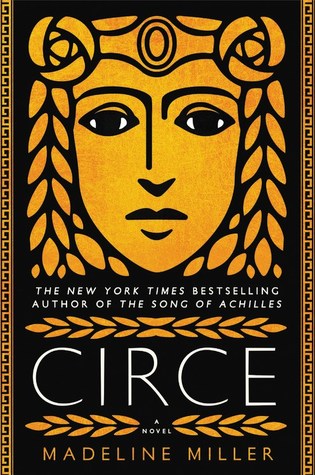
Review: Circe by Madeline Miller
Circe is a witch goddess from Greek mythology. Having read and enjoyed Madeline Miller's Song of Achilles some years ago, I was curious about this new book of hers.
Life is tough for Circe: born a daughter of the titan and sun god Helios, she is not quite as beautiful or striking as many other nymphs. Her ambitious mother is disappointed with her prophesied fate, so immediately starts having more children in the hope of making a "better one". Her siblings are mostly mean to her, and even the one she raises herself turns out to be incapable of love or loyalty. Circe is a bit of an ugly duckling in her family.
It's an encounter with Prometheus that starts her fascination with mortals. She idealises them to begin with, assuming a goodness in humans simply because they are not the selfish and cruel Gods she has grown up amongst. Her naive attempts to help a human don't bear the fruit she had hoped for (love), and her angry attempts at a small revenge turn deadly when she inadvertently creates a monster. Her attempts involve the discovery of witchcraft (magic from a different source than the gods').
Most of the novel takes place on the island Aiaia, where Circe is banished in punishment for her discovery of witchcraft. There, she lives with lions, wolves and wild boars, and, at times, a following of naughty nymphs who have displeased their families and are sent to serve her as punishment for their misdeeds. Sometimes, people and gods visit her...
Circe is a tougher subject matter than heroic Achilles or his lover Patroclus. Her powers and agency are limited: she has witchcraft, but is imprisoned. She is immortal, but female, in a time when women could only really wield power through men. Her role in myths is generally as a side quest, or an obstacle, in some other hero's tale: she is a cameo character. This makes her story more episodic, her relationships with other characters very short-term. She lives on a different timescale from mortals, so all the people she is interested in are mere phases in her life.
The book is faithful to the myths, and that faithfulness limits what it can do to breathe life into Circe's story. Perhaps the most frustrating element is that no gaps are filled in. For example, Circe is disgusted with gods and immortals, including her fellow nymphs. So when she finds her island populated with nymphs who are meant to serve her, she avoids them and isolates herself from them. Yet she is also vaguely protective of "her" nymphs when hostile forces arrive - though she does not seem to know any of them by name or speak with any of them, ever. Her fetish for mortals is understandable, and even her inherent distrust of immortals. A curmudgeonly attitude towards other nymphs who arrive on her island is no big surprise initially, but somehow, it would make a lot more sense for her to develop some kind of relationship with her fellow nymphs. After all, these are the ones who don't fit in, the ones banished for some reason, like herself. There is common ground here, and yet, that common ground is never explored. Circe is filled simultaneously with disdain, disinterest, and protectiveness for them, without ever making a friend or trying to do so.
I did enjoy reading about myths I knew very little about. However, I also found Circe a novel lacking something. It's episodic, but the episodes don't really create a coherent, continuous feeling. Circe's story is serious and a bit joyless. Somehow, a story about the first witch, who lived with and befriended lions and wolves on an island full of naughty nymphs and who turned men who annoyed her into pigs, should have had more of a spark and a twinkle in the eyes.
Rating: 3/5
Wednesday, 1 August 2018
Review: Where the World Ends by Geraldine McCaughrean
Where the World Ends is a novel about a group of youngsters (and a few men) whose working excursion to a stack out in the sea turns into a nightmare when no one comes to collect them after their working time is up. Just a few miles away from their home town, they become marooned on an inhospitable, dangerous, steep rock jutting out from the ocean.
St Kilda was once one of the remotest outposts of British influence in the North Atlantic. A set of islands populated by a few dozen people eking out a harsh living based on sheep farming and foraging (harvesting wild sea birds for food, oil, feathers and fuel). The Warrior Stack, where the story takes place, was a prime location for fowling at the end of the summer, so youngsters were taken there to camp for a fortnight and harvest all the birds they could.
Our protagonist, Quill, is one of the older boys. He has one good friend, Munroe, and a head full of fond thoughts about a girl who visited their island. He has some charisma, looks out for the younger boys, and knows how to get along with people even if they're unpleasant.
The grown ups - a teacher, a gravedigger / assistant to the church, and only one practical man, aren't very effective as a leadership group. The gravedigger is self-important and soon establishes himself as minister / spiritual leader, but he is resented by the other men and, though obeyed, despised by most of the boys. The teacher sinks into depression, so he disengages from everyone and seeks out solitude a lot. And the practical man is content to do his own thing. There is no functional leadership, really.
Which means that the only contestant for a leader whom the youngsters follow out of choice is Quill. With some semblance of diplomatic skills, a sensible head on his shoulders, courage, strength, etc., he becomes a de facto rival to the self-appointed minister.
At times, Where the World Ends reads like a Scottish Lord of the Flies. Man vs nature very rapidly turns into Man vs other men. However, conflicts don't become as entrenched: as islanders from a tiny community, these men and boys are used to living in tiny groups, with frictions and resentments, but ultimately, the capacity to get along just enough to survive.
As an adventure story, Where the World Ends is a bit bleak. The harsh surroundings are one thing, but the boys (and men) are mostly not very likeable. Quill is a decent guy, but the other boys include a hateful, toxic bully, a pompous uber-religious preachy kid, sullen loners, and kids ready to turn into an angry mob with the slightest encouragement. Essentially, this is a story about boys and men barely getting along (and rarely working together) to survive - there are almost no friendships, there is little camaraderie, and the only relief comes in the form of stories they tell each other to remind themselves of home and humanity.
I was surprised by the bleak and harsh mood of the novel. I bought it under the impression that it is a children's book, or YA. (The author is an award winning children's writer, and some reviewers suggested it's a book for mini-Bear-Gryllises). Instead, I found myself reading a novel that would have been squarely aimed at adults, had it been written 40 years ago. It's shorter than contemporary fiction for adults, but in tone, subject matter, character complexity and story, there is nothing particularly child-like about it. The brevity and pace won't test the patience of younger readers, but the story won't feel patronising or childish to even the most prolific adult reader.
Rating: 4/5
Subscribe to:
Posts (Atom)